
JUBAP.NET Field Notes · Case Study · Distributed American Innovation
The Tuxpan Urban Mobility Case: Operational Intelligence Before the Platform Era
A case study in constraint-driven architecture, hybrid formal–informal mobility ecosystems, and pan-American operational intelligence — fifteen years before agentic orchestration became a category.
This case study is not only about a transportation system. It is about how innovation emerges when formal infrastructure, informal intelligence, human incentives, and hard technological constraints collide in the real world.
The JUBAP.US node was built around a simple but demanding idea: American innovation is distributed. Not all of it emerges from corporate laboratories, universities, or well-funded technology ecosystems. Across the Americas, operational innovation has repeatedly emerged from cities, borders, ports, transport corridors, industrial sites, and informal economies — environments where people must solve real problems continuously, with whatever is at hand. In that sense, Latin America is not merely a market for imported innovation. It is a living laboratory of adaptive systems.
The case below focuses on one concrete example: urban transport intelligence in Tuxpan, Veracruz, developed after earlier field learning in Cuba and before large-scale mobility platforms became mainstream. The claim is precise: many patterns later formalized by digital platforms already existed as human, operational, and informal coordination mechanisms in Latin American environments. The work documented here consisted of understanding those patterns, extracting their operational intelligence, and translating them into usable architecture.
Section 01From Barcelona to Cuba: The First Operational Shock
Before the Mexican field work, a formative experience took place in Cuba, at the University of Las Tunas. It was framed as a teaching mission; in practice it was a learning experience.
The mental model arriving from Barcelona was European transport planning: structured public transport, frequency control, multimodal ticketing, planned routes, centralized coordination. Barcelona had demonstrated that a city could solve much of its mobility problem through architecture — integrated routes, shared tickets, intermodal connections.
Cuba revealed something different. Transport operated through an extraordinary mix of modes: buses, trucks adapted for passengers, collective taxis, motorcycles, bicycles, horse carts, informal shared rides. At first sight, disorder. Operationally, something deeper: a highly adaptive mobility ecosystem that ran not on formal infrastructure but on human coordination, negotiation, local knowledge, and continuous adaptation.
One concrete pattern stood out: the collective taxi model. A passenger could sponsor a trip by agreeing to pay the full ride. Along the way, the driver picked up additional passengers heading in the same direction, each paying a smaller amount. If enough passengers joined, the original sponsor paid only for their own seat. No app, no algorithm — yet conceptually the pattern already contained dynamic demand aggregation, shared-ride economics, on-demand routing, and flexible cost distribution. Modern platforms later formalized these ideas through GPS and payment systems. The operational pattern preceded them.
Section 02Tuxpan: A Hybrid Mobility Ecosystem
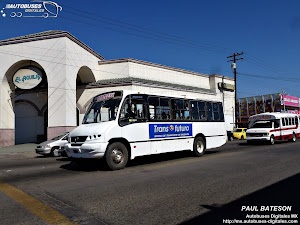
Tuxpan, a mid-sized port city on the Veracruz coast, became the environment where these lessons were tested. The city had a formal bus system — Servicio Urbano de Tuxpan — operating roughly sixty units under a concession structure and covering around seventy percent of the city’s neighborhoods. In parallel, a strong informal collective-taxi ecosystem operated on the same demand.
The formal system had established routes, expected frequencies, and public service responsibilities. But actual behavior was more complex. Most drivers did not operate under a simple salaried logic; income depended on passengers collected and route economics. In practice, each driver behaved as a semi-autonomous operator inside a formal network — and that created a structural incentive problem.
If buses were supposed to pass every five minutes, a stable system would maintain even spacing. But a bus arriving right behind another found fewer passengers; a bus delaying slightly captured more demand near schools, markets, and the city center. Drivers therefore had rational incentives to distort spacing. And when delays grew too large, a second system reacted.
Section 03The Taxi Swarm as an Informal Intelligence Layer
The informal taxi ecosystem did not compete as a fixed-route network. It behaved like a swarm. It detected gaps: when buses delayed, passengers accumulated at stops; once waiting became uncomfortable, taxis entered the gap, collected the most urgent passengers into informal collective rides, and left.
In architectural terms, the swarm acted as an elasticity layer, a demand-overflow mechanism, a real-time gap filler. It was reading the system continuously — where passengers were waiting, where buses were late, where frustration was rising, where collective rides became profitable. The system was informal, but it was intelligent.
The problem was that this intelligence also destabilized the formal network. Buses that delayed to capture demand lost it to taxis if they delayed too much. Buses competing with each other broke frequency; broken frequency eroded passenger confidence; eroded confidence made taxis more attractive. The result was not «formal versus informal.» It was a multi-agent mobility ecosystem with competing incentives — swarm instability in the literal sense.
Section 04The Real Architectural Problem: Incentives, Not Routes
Most transport projects treat routes as the main problem. In Tuxpan, routes mattered, but the deeper problem was incentive architecture. Why would a driver respect frequency if breaking it increased income? Why would a driver report overcrowding accurately if standing passengers meant revenue? Why would informal taxis disappear while they were filling real service gaps? Why would a rigid European-style system work without adapting to local behavior?
The transport system was not only infrastructure. It was a living economic system. The solution therefore could not be purely administrative, and it could not be purely technological. The challenge was to introduce enough intelligence and governance to stabilize the system without destroying the adaptive flexibility that already existed.
Section 05The Architectural Synthesis: Four Operational Cultures
The solution did not copy one model. It combined elements from four operational worlds into a single practical architecture:
Barcelona
- Multimodal integration
- Ticket-based transfer logic
- Frequency control
- Formal route architecture
Cuba
- Adaptive intermodality
- Demand aggregation
- Shared-ride logic
- Respect for informal coordination
Mexico
- Formal–informal coexistence
- Route competition dynamics
- Low-cost implementation
- Field-based adaptation
Early Platform Thinking (US)
- GPS-based control
- Telemetry and distributed devices
- Extensible onboard platforms
- Control-center coordination
The goal was never to impose a foreign model. It was to build an architecture that could operate in the real city.
Section 06Implementation I — A Low-Tech Multimodal Ticket
The first implementation addressed network expansion. A new feeder line was needed to serve a poorly connected neighborhood, but demand was insufficient for a direct route. The real friction was not the route itself: passengers wanted to reach the city center, and transferring between lines meant paying twice. Double payment made the new line unattractive; low attractiveness kept frequency low; low frequency kept the neighborhood disconnected.
The classic European answer — electronic validation, smart cards, integrated ticketing infrastructure — was impossible. The buses had no such technology and the budget did not allow it. So the question was reframed:
The answer was a ticket designed to be cut or manually marked, representing a valid same-day transfer, with day-coded colors making it visually verifiable. Drivers validated transfers without any electronic system. In the final implementation, a simple manual cut on the ticket. It worked, and the feeder line connected the neighborhood to the broader network.
The innovation was not the paper ticket. It was architectural: interoperability without digital infrastructure; transfer rights without electronic validation; network expansion without CAPEX; human-readable distributed state management. The ticket carried valid state — authorization, temporality, transfer rights — in a form that was cheap, robust, trainable, and failure-resistant. Constraint-driven architecture in its purest form.
Section 07Implementation II — Passenger Counting by Computer Vision
The second implementation addressed observability. Frequency decisions required knowing how full buses actually were — but asking drivers was unreliable, because drivers had limited incentive to report overcrowding when additional passengers meant additional income. A governance problem, stated plainly: the system needed observability independent of the operator’s incentives.
Physical turnstiles were tested conceptually and rejected: in a fast, agile Mexican boarding environment, turnstiles destroyed throughput. The control mechanism damaged the very flow it was supposed to govern — a failure mode common to formalist systems that optimize control at the expense of operation.
The path taken instead was camera-based passenger counting. Around 2010, the technology was imperfect and the margin of error significant. But perfect accuracy was never the requirement. The system only needed to distinguish whether a bus was nearly empty, reasonably loaded, overcrowded, or operating outside expected patterns. That was enough to support frequency decisions.
In modern language, this was an early observability layer for public transport operations — good-enough telemetry serving as governance infrastructure where previously there was only driver reporting, passenger complaints, and intuition.
Section 08Implementation III — GPS, SIM Connectivity, and Micro-PC Fleet Intelligence
The third implementation was onboard route and frequency control. In 2010, the device decision was not obvious. Smartphones were immature: Android was early, the iPhone expensive, sensors limited, the ecosystem unstable. Integrated boards and Arduino-type approaches were explored, but deployment pressure demanded speed and reliability. The practical answer was low-cost industrial micro-PCs.
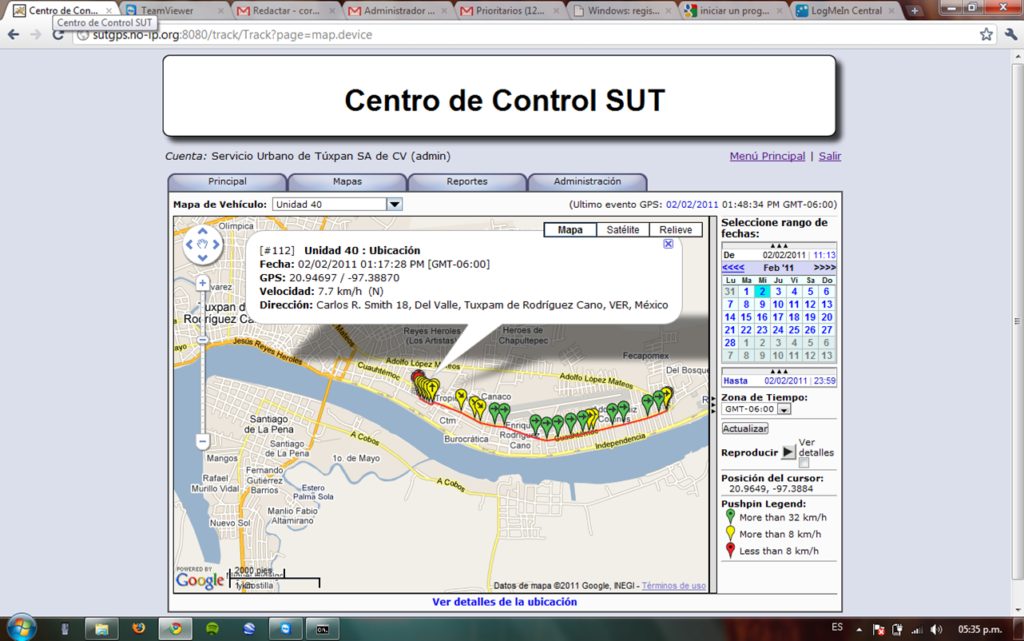
Each onboard unit combined a small PC, USB-connected GPS/SIM device, mobile GPRS connectivity, camera integration, and the capacity to transmit position and operational data to a control center — initially on Windows, with Linux alternatives evaluated. Full unit cost, including camera and connectivity: roughly 200–300 euros.
This was not a GPS tracker. It was an extensible onboard computing platform — a base for passenger information, maintenance telemetry, future sensors, local processing, and operational alerts. Platform thinking before platformization became mainstream; edge intelligence before «edge computing» entered the urban transport vocabulary. The bus became a connected operational node.

Section 09Competing With the Swarm Through Intelligence
The purpose of the system was not surveillance of buses. It was to let the formal network compete intelligently with the informal swarm. The swarm’s advantage was real-time responsiveness. The bus system’s weakness was poor visibility and distorted incentives. Onboard intelligence changed that balance.
With GPS, passenger counting, and control-center visibility, the operator could see where each bus was, where frequency gaps were emerging, which buses were saturated or underused, where passenger accumulation was likely, whether drivers were distorting spacing, and where a route was vulnerable to taxi capture. The control center could then instruct drivers to slow down, speed up, hold spacing, and protect key demand points.
The vocabulary is contemporary — adaptive orchestration, real-time telemetry, swarm coordination, distributed optimization — but the deployment was fifteen years earlier, in a constrained Latin American environment, with resources measured in hundreds of euros per node. Alongside the technical layer ran an explicit cultural change programme for operators, launched in September 2010: process, training, and incentive alignment were treated as part of the architecture, not as an afterthought.
Section 10What Was Actually Learned
The most important learning was not technical. It was architectural.
- Informal systems often contain real intelligence.
What looks like disorder may be a highly adaptive pattern that formal systems fail to see. Dismissing it discards operational knowledge.
- Technology should stabilize intelligence, not replace it.
The goal was never to replace drivers, passengers, or local practice — it was to make the system visible, fair, and coordinated.
- Good-enough telemetry creates major operational value.
Perfect data was not needed. Sufficient signal quality for better decisions was.
- Low-tech architecture can solve high-impact problems.
A cut in a paper ticket solved a network-integration problem that would otherwise have required electronic ticketing infrastructure.
- Mobility is an incentive system.
Routes, vehicles, and tickets matter — but incentives explain behavior. Governance is part of the architecture.
- Latin America is an adaptive-systems laboratory.
Constrained environments force innovation that rarely looks like formal R&D, yet often contains deep operational intelligence.
Section 11Why This Matters: Distributed American Innovation
JUBAP.US was never just a technology node. It represented a working philosophy: innovation across the Americas is not centralized in one country, one city, one laboratory, or one type of institution. It emerges from Barcelona-style urban architecture, Cuban adaptive mobility, Mexican field constraints, US platform thinking, and Latin American operational creativity — and its integration happens through people who move between these worlds and translate field intelligence into practical architecture.
The case is relevant today because current discussions around AI, mobility platforms, and agentic systems tend to assume that intelligence must be centralized, digital, and algorithmic. Tuxpan shows something different: before software platforms became dominant, human ecosystems were already performing distributed intelligence — adaptive routing, demand aggregation, swarm response, real-time rebalancing, decentralized decision-making. The architectural challenge is not only to automate these systems. It is first to understand them, and then, where useful, to formalize them carefully.
That discipline — reading real operational behavior before designing the intelligence layer above it — is the same discipline that today underpins JUBAP.Net’s work in Operational AI Integrity and early-warning regime change detection. The Tuxpan case is one of its field origins.
Operational Lineage
Barcelona (multimodal architecture) → Las Tunas, Cuba (adaptive mobility field learning) → Tuxpan, Veracruz (constraint-driven fleet intelligence, 2010–2011) → Gulf Corridor / Pan-American ecosystems (distributed operational integration) → JUBAP.Net (Operational AI Integrity & regime change detection)