Field Notes

Engineering Value Creation Before the Cloud
JubAp.Net · Field Note

Engineering Value Creation Before the Cloud

JUBAP.Net’s GEPLAN case, before the SaaS and IoT revolutions

JUBAP.Net, the organisation behind the GEPLAN suite, operates today as a complex-systems intelligence centre specialising in Operational AI Integrity and early-warning regime-change detection. Its roots trace back to the early 2000s — to an integrated operational platform built long before public cloud, commercial IoT or plug-and-play APIs existed.

Its roots trace back to the early 2000s, when the practice operated through The Integral Management Society in the United States and Corbera Networks in Mexico. Built from a Nokia R&D engineering background and later grounded in Veracruz, the team developed mission-critical systems for logistics-intensive environments such as PEMEX, TETSA and regional transport operators.

GEPLAN was not conceived as a conventional software product. It was engineered as an integrated operational platform: a system capable of connecting logistics, maintenance, inventory, procurement, telemetry, volumetric control and operational estimation inside a single execution environment.

At a glance
Delphi
ASP.NET · MySQL — the GEPLAN stack
7+
interoperable modules, one platform
Pre-IoT
reverse-engineered device integration layer
GEPLAN/V
volumetric control & service stations
KPI-based
commitments — value, not features
The engineering

Engineering before commercial APIs

Long before public cloud, commercial IoT platforms and plug-and-play APIs became standard, GEPLAN functioned as an early on-premise predecessor to the Software-as-a-Service model for industrial operations.

The suite was built using Delphi, ASP.NET and MySQL, supported by a modular architecture designed to be adapted across different operational contexts. At the time, the language of microservices was not yet common in industrial environments, but GEPLAN already followed a separation of concerns across interoperable modules: logistics, fleet control, workshop management, warehouse operations, volumetric control, service-station administration and reporting.

Because commercial IoT infrastructure did not yet exist, the engineering team relied heavily on reverse engineering to connect industrial hardware, fuel dispensers, telemetry devices and legacy operational environments directly into the platform. This created a practical pre-IoT integration layer. Data that would otherwise remain trapped in field devices, manual logs or isolated systems could be captured, normalised and transformed into operational intelligence.

The team also used scripting, macros, event triggers and early RPA-style automation to bridge gaps between industrial devices, back-office systems and field users. The objective was clear: reduce manual re-entry, eliminate operational blind spots and create a reliable data fabric where no commercial middleware was available.

Capabilities

Advanced capabilities in a pre-IoT era

GEPLAN’s core modules connected logistics operators, workshops, warehouses, fleet companies and service-station environments into a unified operational platform.

The GEPLAN/V volumetric-control module, for example, integrated tank telemetry, monitored fuel levels and connected with dispenser brands such as Wayne and Gilbarco. It linked operational data with PEMEX-related workflows for transport, loading, unloading, invoicing and franchise management. This was not only fuel monitoring; it was an integrated control environment combining point-of-sale information, ticketing, inventory movements, tank status, fuel dispatch and service-station administration.

In parallel, the private fleet-control environment integrated Omnitracs satellite telemetry, dispatch centres, drivers, fleet availability, maintenance events, fuel control, electronic work orders, alerts and operational evidence into one decision-support layer.

This was more than GPS tracking. It was an operational-intelligence fabric connecting field execution, asset condition, logistics planning and management visibility in near real time.
Architecture

Planning layer and execution layer

One of the strongest engineering principles behind GEPLAN was the separation between planning and execution. The planning layer handled origins, destinations, volumes, priorities, routes, capacity constraints, distances, travel times, waiting conditions and operational restrictions. The execution layer handled vehicle tracking, driver communication, status transitions, route monitoring, delays, exceptions, field evidence and full trip traceability.

This effectively created a state-driven logistics execution engine. Each movement could be broken down into operational stages and checkpoints, allowing teams to identify bottlenecks, deviations and delays as they emerged.

Planning without execution visibility becomes theoretical. Execution without planning logic becomes reactive. GEPLAN connected both layers into a single operating model.
Assets

Asset lifecycle and maintenance intelligence

GEPLAN also managed the lifecycle of operational assets, especially transport units. The workshop and maintenance modules included preventive maintenance, corrective maintenance, investment-based maintenance, scheduling by mileage and time, full maintenance history, real-time unit status, workshop backlog and estimated return-to-service dates.

This created a direct connection between maintenance and logistics planning. A vehicle in maintenance was not merely an accounting or workshop record. Its expected return date affected dispatch capacity, route planning, production support and future commitments. Maintenance status became part of the operational decision model.

The warehouse module was also integrated with maintenance and logistics. It managed stock control, inventory movements, spare-part assignments, warehouse requests, procurement requisitions and supplier-fulfilment workflows. One of the most advanced elements was the use of consignment inventory with external suppliers. This allowed visibility of third-party stock, faster access to critical spare parts, reduced downtime and tighter coordination between procurement, workshop activity and fleet availability.

Analytics

Operational estimation and industrial analytics

GEPLAN’s estimation layer was one of its most advanced components. The platform combined operational inputs such as production per well, separation capacity, tank volumes, route distances, loading and unloading constraints, vehicle availability and workshop readiness.

From these inputs, the system generated outputs such as transported volumes, planned versus real production, kilometres travelled, fleet-utilisation rates, capacity constraints, congestion points, delay patterns and bottleneck identification. This transformed GEPLAN from a transactional system into an early industrial data and operational-intelligence platform. In practice, it became one of the few consistent sources of truth across logistics, production support, transport performance and operational readiness.

Delivery model

Driven by organizational consulting

What truly made GEPLAN function like a modern SaaS was not only its modularity, but its delivery model. The platform was never deployed as software alone. Each implementation was bundled with deep organisational consulting, process mapping, job profiling, operational re-engineering and governance redesign.

In many cases, the journey led to ISO 9001-style process formalisation before the full deployment of the software. The reason was practical: a critical system cannot remain reliable if the underlying operation is undocumented, inconsistent or dependent only on informal habits. The platform was then adapted to the refined operational model, ensuring that the technology served the operation instead of forcing the organisation into a rigid software shell.

This consulting-plus-software model aligned strongly with the meaning of The Integral Management Society: managing the whole system rather than optimising a single tool, department or interface.

Commercials

Value creation over features

The commercial philosophy was also engineering-driven. Client commitments were based on measurable value creation rather than software features. The promise was not that a module would add more screens or reports — it was that a configuration, process and system architecture would generate measurable operational improvement.

1Reduce inventory shrinkage.
2Improve scheduled-transport efficiency.
3Tighten fuel control.
4Increase fleet availability.
5Shorten maintenance cycles & improve operational visibility.

This pushed the engineering team to treat GEPLAN as a living part of the operation. Field feedback, control-centre usage, maintenance constraints, telemetry gaps, operator behaviour and management reporting all became part of the engineering loop.


Continuity

From industrial systems engineering to Operational AI Integrity

Looking back, GEPLAN was not simply an ERP, not simply a logistics system and not simply a fleet-control tool. It was an end-to-end operational-intelligence and execution platform combining planning, execution, maintenance, supply chain, telemetry, estimation and governance in a single integrated environment.

That discipline of tying technology architecture to real-world behaviour became one of the foundations of JUBAP.Net’s current work in Operational AI Integrity and early-warning regime-change detection. Systemic shifts are not identified only through abstract models. They are detected through concrete operational signatures: delays, abnormal consumption, inconsistent execution, changing capacity, maintenance degradation, bottlenecks, human workarounds, data gaps and weak signals distributed across the system. GEPLAN’s value was that it forced those signals to become visible.

That is the engineering continuity behind JUBAP.Net today: building intelligent systems that do not merely process information, but understand the operational structure in which that information becomes meaningful.
The arc. Before cloud, IoT or APIs, GEPLAN behaved like an early SaaS for industrial operations.
It separated planning from execution, tied maintenance to logistics, and turned field inputs into estimation and analytics.
It was delivered as consulting-plus-software, committed to measurable KPIs rather than features.
And that discipline is the engineering continuity behind JUBAP.Net’s work in Operational AI Integrity.
The Integral Management Society — IMSV
Stewarded by The Integral Management Society / IMSV.org. JubAp.Net · info@jubap.net · jubap.net

Historical account. The client for the PEMEX-related work was TETSA (Transportes Especializados de Toluca, S.A. de C.V.), the hydrocarbon-transport concessionaire operating in PEMEX’s region; GEPLAN was a TETSA-side system deeply integrated with PEMEX logistics and operational processes, not a PEMEX-owned platform. Related full case study: GEPLAN — Mission-Critical Logistics Intelligence for PEMEX.

GEPLAN Suite — From Embedded Suites to Operational AI Integrity
JubAp.Net · Case Study

GEPLAN Suite

Mexico before Industry 4.0 · JUBAP.Net’s early SaaS experiment in industrial Mexico

JUBAP.Net, the organization behind the GEPLAN suite, is today a complex-systems intelligence centre focused on Operational AI Integrity and early-warning regime-change detection. Its origins lie in the early 2000s — in a Mexico that was not yet speaking the language of “Industry 4.0,” but was already building a serious software and industrial-technology base.

From NOKIA R&D to GEPLAN
From NOKIA R&D to GEPLAN. Source: Tegrity.AI.
At a glance
137,000+
people in Mexico’s software sector, mid-2000s
2002 · 2005
PROSOFT launched · MoProSoft formalised
Delphi
ASP.NET · MySQL — the GEPLAN stack
16,000
development wells planned across Chicontepec
2008
catalog & user manuals — downloadable below
Context

Mexico before Industry 4.0

By the mid-2000s, Mexico was not yet speaking the language of “Industry 4.0,” but it was already building a meaningful software and industrial-technology base. Official planning documents from the period described a national ICT market expected to grow by around 12%, with software forecast to grow faster, at about 19%, while the sector already employed more than 137,000 people. Mexico had launched PROSOFT in 2002 to strengthen the software industry, and by 2005 had formalised MoProSoft as a national process model for software development and maintenance. By 2006, PROSOFT was already supporting more than 330 projects and thousands of companies, most of them small and medium-sized firms.

This mattered because the country was not relying only on imported enterprise software. Mexico already had a real software ecosystem: large firms such as Softtek, Grupo Tress and Zentrum, but also hundreds of smaller firms building custom solutions for logistics, manufacturing, retail, transport, fuel distribution and industrial operations. States such as Nuevo León, Guadalajara, Monterrey and Baja California were becoming important technology clusters, producing growing numbers of engineers and software developers while benefiting from proximity to the United States.

It was also a particular moment socially. Before the worst years of the drug war and generalised insecurity, Mexico was seen by many international professionals as an attractive place to live and work remotely, even before the term “digital nomad” became common. That was also the case for the founders of JUBAP.net and The Integral Management Society SAS. After working in Europe, including at the Nokia R&D center in Barcelona, and spending time in the United States, they eventually established themselves in Veracruz, Mexico. From there, they built systems not only for PEMEX-related logistics, but also for Latin America and the United States, working with Mexican developers who had experience in medium and large systems for companies such as CSAV and other logistics-intensive organisations.

PEMEX itself was operating in a highly digital and operationally demanding environment. Its 2008 annual report describes telecom modernisation, SCADA support, satellite communications, internal logistics and franchise-monitoring systems, and even a NASA-supported GEO PEMEX 3D viewer for emergency response and operational maintenance. In the same period, Invensys opened a gas-operations centre in Reynosa to support PEMEX and described Burgos as the largest SCADA system it had installed in Latin America. The relevant context is therefore not a “digitally empty” Mexico, but a large industrial landscape where major operators, vendors and local teams were all building serious control, monitoring and integration capabilities.


The suite

An installed suite with a SaaS mindset

GEPLAN was architected in an era before public cloud, commercial IoT platforms and ready-made APIs, yet it behaved conceptually like an early SaaS for industrial operations. It was delivered as an on-premise, installable suite based on Delphi, ASP.NET and MySQL, organised into interoperable modules for logistics operators, workshops, warehouses, fleets and service stations. The 2008 catalog already describes a coherent environment: inventory and budgeting, vehicle maintenance, logistics planning, fuel-consumption control, volumetric management, ERP-style integration, remote access and centralised operational reporting.

Because standard IoT stacks did not yet exist, the team relied heavily on reverse engineering to connect hardware, dispensers, telemetry devices and legacy SCADA environments directly into GEPLAN. The result was a de facto pre-IoT integration layer, reinforced by extensive scripting and early RPA-style automation to move data between industrial devices, back-office systems and field users without manual re-entry.

1Inventory & budgeting.

Stock control and operational budgeting as the base layer of the suite.

2Vehicle maintenance.

Workshop, preventive and corrective maintenance tied to fleet readiness.

3Logistics planning.

Route, trip and dispatch coordination across operators and field teams.

4Fuel-consumption control.

Consumption tracking and control across vehicles and operations.

5Volumetric management.

Volumetric control for service stations and hydrocarbon movements (GEPLAN/V).

Architecture

Modular architecture, pre-microservices

Technically, GEPLAN adopted a modular architecture designed to be adapted for different clients and operational contexts, even if the language of microservices was not yet in use. Modules such as GEPLAN/V for volumetric control could be deployed as part of a larger suite or as standalone components tightly integrated with existing infrastructure.

GEPLAN/V was a relatively advanced concept even by current standards. It could read dispensers from multiple brands such as Wayne and Gilbarco, integrate tank telemetry, monitor opening events, pressure and fuel levels, connect to PEMEX for transport, loading and unloading monitoring, and integrate invoicing with PEMEX franchise workflows. It also supported POS, ticket printing, inventory control and complete service-station management. What made it distinctive was not that each feature was unique by itself, but that all of them were integrated into one practical environment almost two decades before industrial IoT became mainstream.

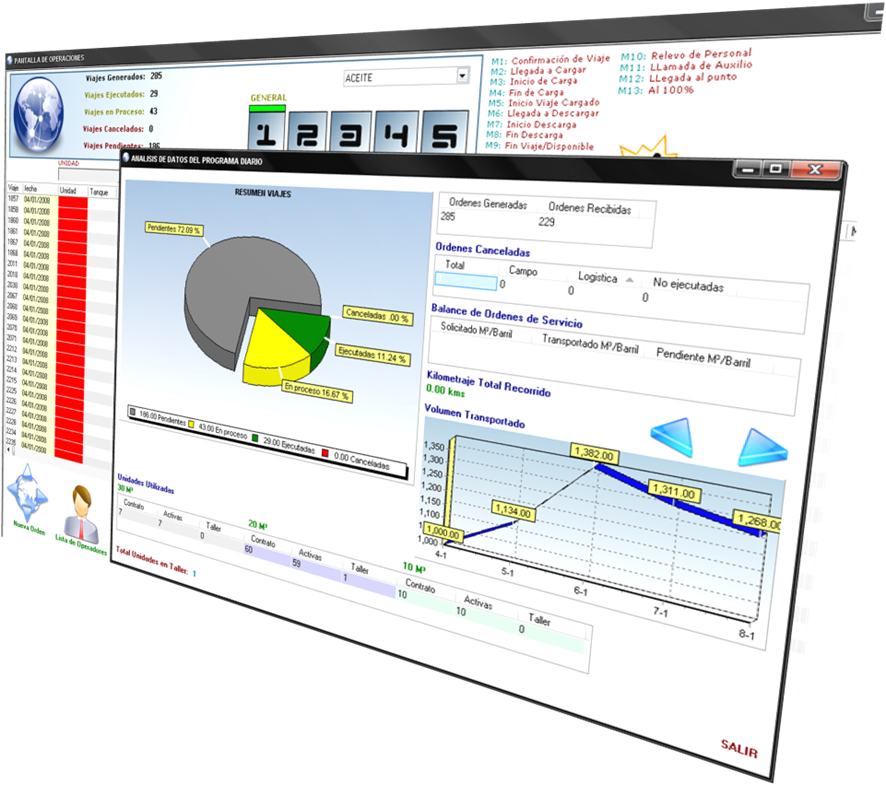
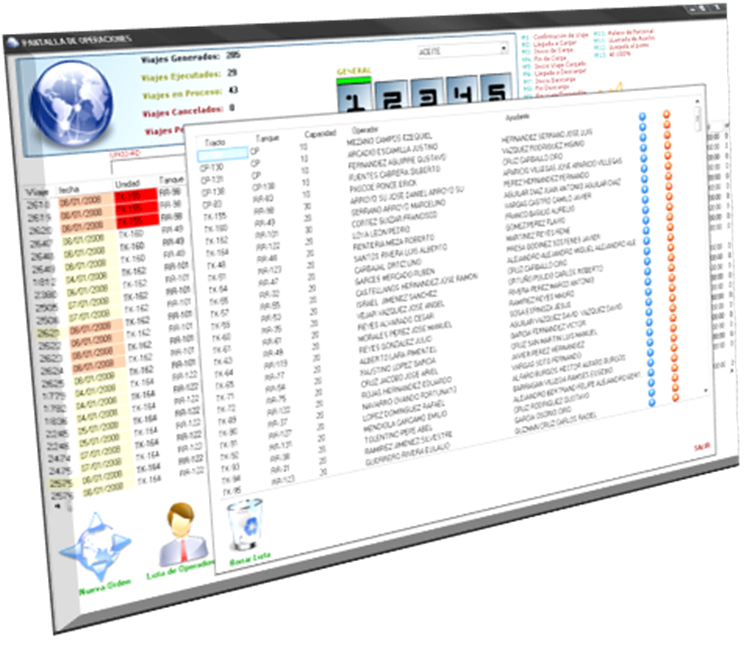
JUBAP.net GEPLAN Communications Control Center Screen
JUBAP.net GEPLAN — Communications Control Center Screen. Source: Tegrity.AI.

Similarly, the private fleet-control environment developed around GEPLAN went beyond standard GPS tracking. It connected transport companies, dispatch centres, workshops, maintenance, fuel control, drivers, inventory and operational reporting. The PEMEX / TETSA control-centre document shows the same logic in live operation: Omnitracs satellite telemetry, data mining, alerts, reporting, electronic work orders, secure communications, evidence attachments, operational alerts and linkage to PEMEX estimation workflows.

This was not just fleet monitoring. It was an early operational-intelligence layer connecting field execution, communications, compliance and planning.
Model

SaaS as consulting-plus-software

What made GEPLAN particularly close to a SaaS model was not only its modularity but the way it was commercialised and implemented. Clients did not simply receive software licences: they engaged in a structured consulting process that began with job-profile mapping, process discovery and organisational re-engineering. In many cases, this journey led to ISO 9001-style process formalisation as a first step, before fully tailoring and deploying the system to the refined operational model.

The suite was therefore “consumed” together with organisational consulting, with JUBAP.Net acting as both software provider and integrator of management practices. This consulting-plus-software approach aligned strongly with the meaning of The Integral Management Society: a focus on managing the whole system rather than a single tool or department.

Commercials

Commitments based on value, not features

Commercially, the company structured its commitments around value creation instead of feature delivery. Contracts did not centre on a checklist of functionalities; they focused on concrete business KPIs such as reducing inventory shrinkage, increasing the efficiency of scheduled trips, tightening fuel control or improving fleet availability.

The promise to each client was that a given module or configuration would generate measurable operational improvements, not just additional screens or reports. This value-based orientation pushed the engineering teams to design GEPLAN as a living part of the operation, continuously refined through field feedback, rather than as a static IT product. Over time, that discipline of tying technology architecture to real-world behaviour became the foundation of JUBAP.Net’s current work in Operational AI Integrity and early-warning regime-change detection, where systemic shifts are identified not by abstract theory but by their concrete operational signatures.


An honest reading

Chicontepec: ambition and outcome

The broader Chicontepec programme did not meet its original ambitions, and that should be stated clearly. The ASF’s 2010 performance audit describes Chicontepec as a strategic response to Cantarell’s decline, representing 40% of the country’s hydrocarbon reserves, with a plan based on drilling 16,000 development wells. The same audit explains that well productivity was very low — around 0.1 to 0.3 thousand barrels per day per well — and concluded that production targets were missed, and that the productive return from 2002 to 2008 was only 2.5 centavos for every peso invested.

That failure should be acknowledged directly. But it does not make the associated digital and operational systems irrelevant; if anything, it shows how ambitious the surrounding logistical and decision environment really was.

GEPLAN should not be presented as a unique global first, and it would be exaggerated to frame it that way. But it was also far from a trivial local tool.

A fair international reading is this: GEPLAN was a technically serious, Mexican-built integration layer, developed in an environment where the country already had growing software clusters, formal process models, large industrial telecom and SCADA deployments, and domestic firms capable of building custom systems for demanding corporate and industrial use cases. In that sense, GEPLAN belongs to the early wave of practical industrial digitalisation in Latin America — before the later vocabulary of IIoT, control towers and Industry 4.0 made those architectures easier to describe.


Downloads

2008 user manuals & suite catalog

Original period materials — 2008 GEPLAN user manuals and the JUBAP.net GEPLAN Suite catalog:

The arc. GEPLAN behaved like an early SaaS for industrial operations — before public cloud, IoT platforms or ready-made APIs existed.
It integrated logistics, maintenance, warehouses, fuel and volumetric control into one practical environment, connected to PEMEX workflows.
It was sold as consulting-plus-software, committed to business KPIs rather than feature lists.
And that discipline — tying architecture to real operational behaviour — is the foundation of JUBAP.Net’s current work in Operational AI Integrity.
The Integral Management Society — IMSV
Stewarded by The Integral Management Society / IMSV.org. JubAp.Net · info@jubap.net · jubap.net

Historical account (2006–2010). The client for the PEMEX-related work was TETSA (Transportes Especializados de Toluca, S.A. de C.V.), the hydrocarbon-transport concessionaire operating in PEMEX’s northern region; GEPLAN was a TETSA-side system deeply integrated with PEMEX logistics and operational processes, not a PEMEX-owned platform. Related reading: GEPLAN — Mission-Critical Logistics Intelligence for PEMEX.

How JUBAP.Net Turned Nokia-Style Distributed Intelligence into Field-Based Operational Architecture

When people speak today about digital nomadism, they usually imagine laptops on café tables, co-working spaces, and remote work as a lifestyle choice.

That is not what happened here.

The early JUBAP.Net lineage was shaped by a much more demanding form of distributed work: high-technology information management, mobile infrastructure, remote expert coordination and operational continuity across borders, long before remote work became normalised.

The founder, Iván Abril Palma, had previously worked as Information Manager in Nokia’s distributed R&D environment in Barcelona. This was not simply about carrying a laptop. It involved the information, infrastructure and coordination logic required to support advanced research and development teams working across mobility, communications and distributed technical environments at the edge of what was possible at the time.

That experience became one of the foundations of the JUBAP.Net method.

What later appeared as digital nomadism was, in reality, an early form of distributed operational intelligence: the ability to keep technical work, expert collaboration and delivery continuity alive across countries, networks, servers, forums and unstable infrastructure.

From Nokia Distributed Intelligence to Practice Networks

After Nokia, the founder did not simply leave a corporate role and begin working remotely as an individual consultant.

He continued to operate through networks of experts, technical forums and distributed communities where specialised knowledge could be found, tested and integrated into real work. These were not casual online conversations. Around those forums, relationships gradually became working structures, then project teams, then continuity-based practice nodes.

This was one of the early roots of JUBAP.Net’s later operating model: finding capability wherever it existed, integrating it into disciplined work, and coordinating it across distance without losing operational responsibility.

In the United States and Canada, where part of the work was delivered, this was already advanced for the time. The same was true in frontier and transitional environments such as Cuba and the Bahamas, where infrastructure constraints made distributed coordination not only innovative, but necessary.

The result was not a remote lifestyle. It was the slow creation of a distributed practice network.

Virtual Servers Before the Cloud Became Normal

As the work matured, the distributed model became more technical.

The teams began integrating remote infrastructure, virtual servers, shared environments and secure coordination mechanisms that allowed people in different locations to work on systems with continuity. This was before cloud platforms, SaaS ecosystems, collaboration suites and remote-first delivery became standard business vocabulary.

Yes, it was possible.

But it required technical discipline, improvisation under control, and a strong understanding of how information, infrastructure and people had to remain aligned even when the physical team was not in the same place.

This capability later became essential for GEPLAN.

GEPLAN was not built only by people sitting in one office. It required field observation, remote development, distributed support, infrastructure adaptation, operational feedback loops and continuous contact between developers, consultants, field teams and decision-makers.

This was the origin of what JUBAP.Net would later recognise as its early agile tiger teams.

Early Agile Tiger Teams Before Agile Became Corporate Language

At the time, the team did not call this “agile” in the current corporate sense.

The closest formal reference was extreme programming. But the JUBAP.Net practice went beyond programming. It combined short delivery cycles, direct field observation, remote technical coordination, rapid prototyping, operational reengineering and intense proximity to the users who actually carried the process.

It was distributed work with maximum operational closeness.

That combination became distinctive: mobile teams, remote specialists, local operators, consultants and developers working as a single adaptive unit around the problem, not around a rigid project plan.

These early agile tiger teams were not created for speed alone. They were created to survive complexity.

They could enter an unstable environment, understand the real operating constraints, identify hidden behaviours, adapt the system quickly, reengineer processes, train users and keep the operation running while the transformation was still being built.

This is a central JUBAP.Net pattern: distributed intelligence combined with field intimacy.

Building JUBAP.Net From Motion

The company that would later create the GEPLAN suite emerged from this remote-first and border-crossing practice: Corbera Networks as an engineering and consulting vehicle, and The Integral Management Society as the broader framework to align technology with whole-enterprise management.

Those years were not glamorous. They involved moving between countries, carrying equipment, connecting through unstable networks, building trust through forums and expert circles, and calculating each trip with precision. The work depended on transport, connectivity, servers, cash flow and human reliability.

That discipline later translated directly into GEPLAN’s operational rigor.

In GEPLAN, every module had to justify itself in the field: fuel saved, inventories stabilised, trips scheduled, trucks kept available, maintenance anticipated, reports trusted and operational decisions improved.

The same logic that had sustained distributed work across countries was now applied to industrial operations under pressure.

Nomadism Applied to Industrial Ground

What makes the JUBAP.Net story unusual is that this early mobility did not remain in the virtual world.

It ended anchored in one of the least “nomadic” contexts imaginable: the dense, high-pressure industrial ecosystem around PEMEX in northern Veracruz.

From there, the founder and the wider team began to design what would become the JUBAP.Net GEPLAN suite: an industrial operating environment for logistics, maintenance, fleet control, volumetric fuel management, warehouse control, procurement, administration and decision support.

GEPLAN was built in Delphi and later partially in .NET, with MySQL and PostgreSQL databases, at a time when neither SaaS, IoT platforms nor commercial APIs were standard tools.

To connect fleets, fuel dispensers, telemetry devices, workshops and administrative processes, the team relied on reverse engineering, custom integrations and RPA-style automation long before RPA became a recognised category.

The method was not to design from abstraction.

Engineers and consultants sat in dispatch centres, workshops and field bases to observe how operations actually behaved before encoding them into software. At the same time, distributed contributors and remote technical support allowed the system to evolve continuously.

This was the core paradox: the team moved, connected and adapted so that the industrial system could finally become stable.

A Suite That Travelled With the Organisation

Although JUBAP.Net GEPLAN was technically installed on-premise, its delivery felt remarkably close to what would later be recognised as SaaS.

It was modular, configurable and always deployed together with organisational consulting. Each client engagement began with job-profile mapping and process discovery, then moved into reengineering and, frequently, ISO 9001 certification as a baseline for disciplined operations.

The software “travelled” conceptually with each organisation’s maturity level, adapting to real processes instead of imposing a rigid ERP shell.

Commitments to clients were framed not around feature lists, but around business KPIs: reducing inventory losses, improving scheduled trip efficiency, tightening fuel control and stabilising fleet availability.

In practice, the real contract was with the value created in the field, not with the interface.

From Distributed Teams to Stationary Intelligence

Today, JUBAP.Net describes itself as a complex systems intelligence center specialised in Operational AI Integrity and early warning regime change detection.

That capability did not appear suddenly with modern AI.

It emerged from years of working with distributed teams, unstable infrastructure, remote experts, local operators, field constraints and mission-critical industrial systems where every error had operational consequences.

The capability to sense emerging systemic shifts, identify hidden patterns and anticipate structural breaks is not an abstract academic exercise. It is the distilled result of working inside volatile environments where logistics, energy, communities, infrastructure and institutions intersected.

In that sense, JUBAP.Net’s early mobility was never about escaping into a lifestyle brand.

It was about gathering, coordinating and operationalising distributed intelligence until it could be engineered into systems that remained stable under pressure.

The people moved.

The teams connected across distance.

The infrastructure adapted.

And the industrial brain became stationary enough to support operations that could not afford to stop.

This is the origin of the JUBAP.Net early agile tiger team model: distributed intelligence, maximum field proximity, rapid adaptation and operational accountability under real conditions.

Before Digital Transformation Had a Name — GEPLAN
JubAp.Net · Field Note

Before Digital Transformation had a name

JUBAP.Net GEPLAN and the hidden logistics lab behind PEMEX operations · Chicontepec, late 2000s

When executives speak today about “digital transformation,” they usually refer to programs with formal roadmaps, dedicated offices, and carefully branded initiatives. In the late 2000s, the JUBAP.Net GEPLAN program around PEMEX and its transport contractor TETSA was something very different: a practical, field-driven, and quietly radical transformation that never used the term, yet achieved exactly what many programs still claim to pursue.

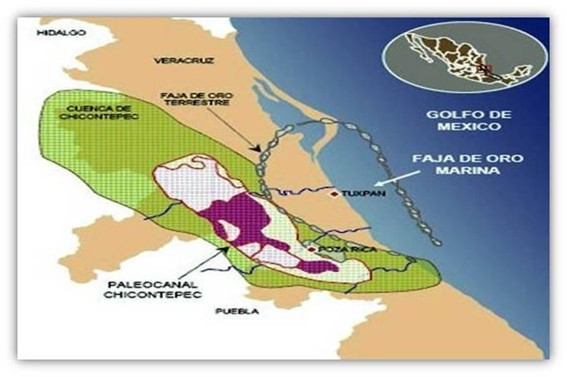
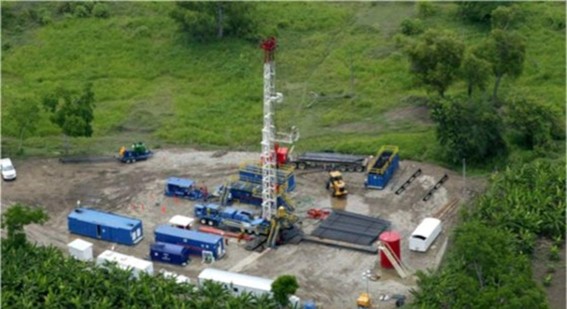
Proyecto Chicontepec - PEMEX
Proyecto Chicontepec — the operating environment behind GEPLAN. Source: Tegrity.AI.

At the time, we operated as Corbera Networks, within the broader Integral Management lineage that later evolved into JUBAP.Net. The team engaged in a logistics and planning system for one of the most complex oil projects in Latin America, Chicontepec, where thousands of wells, irregular production, rugged terrain, and scattered communities made coordination extraordinarily difficult. Over time, it evolved into a proto-ERP with modules for logistics, fleet maintenance (CMMS), warehouse management, purchasing, finance, HR, and administration, becoming the digital backbone of transport operations serving PEMEX in central and northern Mexico.

At a glance
3
independent operations unified into logistics hubs
7
proto-ERP modules — logistics to HR & admin
20+
companies later requested the same ISO service
up to 11
manual transcription layers depended on it
9001 · 14001 · 18001
ISO / OHSAS governance framework
The turn

From Firefighting IT to Structured Reengineering

In its early phase, the JUBAP.Net GEPLAN team spent most of its time putting out fires: solving urgent incidents, dealing with real and invented system errors, and facing any pretext that operators could find to disconnect the system. Behind many of those interruptions, they began to detect patterns: fuel theft from trucks, unregistered entries and exits from fluid plants, overweight trips, and “side” operations for third parties.

This led to a strategic insight: to make JUBAP.Net GEPLAN sustainable, it was not enough to improve the software. The operation itself had to be reengineered and fully standardized, so that processes were documented, auditable, and protected.

Digitalization could not survive without governance.
Governance

Hubs, ISO and Governance Before “Digital”

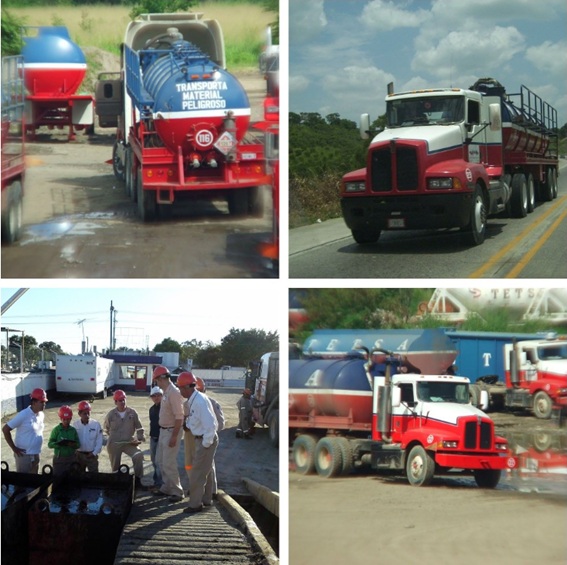
From that point, the program expanded beyond pure technology into an integrated organizational transformation. Multiple transport operations that previously functioned as independent, poorly coordinated units were unified into three logistics control centers, or hubs, where information flowed, orders were issued, and full traceability was ensured. These hubs became the visible face of a deeper redesign of roles, procedures, and decision flows.

GEPLAN logistics control centres / hubs
The logistics control centres (hubs). Source: Tegrity.AI.

In parallel, the team documented every job profile and procedure from scratch and adopted ISO 9001 as the backbone for standardizing the operation. The first certification had an immediate signaling effect: the news spread in the region, and more than twenty companies eventually requested similar services to formalize and improve their own processes. Later came ISO 14001 for environmental management and OHSAS 18001 for health and safety, consolidating a comprehensive governance framework around an operation that had previously been almost entirely analog.

1ISO 9001 — quality & process.

The backbone for standardizing the operation; every job profile and procedure documented from scratch.

2ISO 14001 — environment.

Environmental management, added once the process backbone was in place.

3OHSAS 18001 — health & safety.

Occupational health and safety, consolidating a full governance framework around a once-analog operation.

External audits played a crucial role. Beyond checking compliance, auditors’ presence helped anchor discipline and seriousness in departments that had long functioned on unwritten habits and informal power structures. That cultural shift was what finally allowed JUBAP.Net GEPLAN to stop being “just an IT system” and become the axis of PEMEX’s logistics process in the region.

Human factors

Designing for Non-Digital Users

One of the most striking aspects of the JUBAP.Net GEPLAN experience is that its users were not “digital natives” or early adopters. Many had almost no prior exposure to information systems and came from environments where Excel, if present, already represented a significant technological leap. This forced the design of ultra-intuitive interfaces, inspired in part by usability principles learned at Nokia but adapted to the local reality: large, clear, color-coded buttons, visual cues reminiscent of early Apple simplicity, and workflows aligned with how people actually worked in the field.

The environment was not only analog; it was politically and socially complex. Different departments, working cultures, organizational micro-powers, and high institutional pressure coexisted in the same ecosystem. System outputs were not harmless reports: they influenced payments, bonuses for hundreds of workers, and the viability of many contractors. In that context, any misinterpreted number could become a crisis.

Reach

A Hidden System-Country Interface

As the transformation advanced, JUBAP.Net GEPLAN began to play a role that went far beyond a vendor’s internal system. With just a few input data and specific algorithms, it was possible to infer critical information from other parts of the PEMEX system that were not yet digitalized: real-time production estimates for wells, tank volumes, and even maintenance conditions for valves, turbocompressors, or separation batteries. In practice, the system offered more visibility and reliability than the large army of supervisors traveling the fields in trucks taking notes by hand.

JUBAP.net GEPLAN Communications Control Center Screen
JUBAP.net GEPLAN — Communications Control Center Screen. Source: Tegrity.AI.

PEMEX started using JUBAP.Net GEPLAN’s reports as a reference source, even if integration remained almost comically manual: spreadsheets generated from JUBAP.Net GEPLAN were copied cell by cell into identical spreadsheets in other departments, sometimes passing through up to eleven areas where teams of clerks transcribed the same data without ever seeing the original system.

Many of those people depended on JUBAP.Net GEPLAN without knowing it.
Legacy

A Prototype for Operational AI Integrity

Looking back, GEPLAN can be seen as a laboratory of digital transformation before the label existed: a combination of reengineering, ISO-based standardization, logistics hubs, progressive digitalization, and interface design for non-digital users in a politically sensitive environment. It demonstrated that a critical system can function and endure in an analog, fragmented, and socially complex context if it is anchored in governance and real processes, not just technology.

For JUBAP.Net, that experience became the foundation of its current focus on Operational AI Integrity and early-warning regime-change detection. The same principles that once allowed a logistics system to infer hidden behaviors and resist sabotage now inform a broader mission: to design intelligent systems that understand how complex operations behave under pressure — not in theory, but in the real world.

The arc. GEPLAN began as firefighting IT, and became a transformation that never used the word.
It survived by anchoring digitalization in governance — reengineering, ISO standardization and three logistics hubs.
It was designed for non-digital users in a politically sensitive operation, where a misread number could become a crisis.
And that discipline — endurance through governance and real processes — is the foundation of JUBAP.Net’s current work in Operational AI Integrity.
The Integral Management Society — IMSV
Stewarded by The Integral Management Society / IMSV.org. JubAp.Net · info@jubap.net · jubap.net

Historical account (late 2000s). The team operated as Corbera Networks within the Integral Management lineage that became JUBAP.Net. The transport contractor was TETSA, the hydrocarbon-transport concessionaire operating in PEMEX’s region; GEPLAN was a TETSA-side system deeply integrated with PEMEX logistics and operational processes, not a PEMEX-owned platform. Related reading: Mexico before Industry 4.0 — the GEPLAN case · GEPLAN — Mission-Critical Logistics Intelligence.

Experiencias Xcaret Logistics
JubAp.Net · Whitepaper

Experiencias Xcaret Logistics

xSeil · Field-deployed logistics-intelligence platform · Experiencias Xcaret / Xtours, 2016–2017

A large-scale passenger-transport orchestration platform built for fully committed demand under hard operational constraints — planning, execution and real-time control across the full transport lifecycle.

Experiencias Xcaret passenger-transport operations, Riviera Maya
Experiencias Xcaret — passenger-transport operations in the Riviera Maya. Source: xSeil case study, Tegrity.AI.
At a glance
~12,000
visitors per day across seven parks
60M
feasible configurations evaluated per assignment
17,000+
people directly employed
~500
hotels and pickup points
100+
operational rules in the planning engine
Operating context

Operating Context and Experiencias Xcaret Transformation

Experiencias Xcaret is the largest integrated tourism operator in Latin America, based in the Riviera Maya. It runs seven theme parks and welcomes around 4 million visitors per year, or roughly 12,000 per day, while directly employing more than 17,000 people and supporting over 65,000 families indirectly across its wider ecosystem of roughly 500 hotels, transport providers, resellers, and on-site service operations

Around 2016–2017, the organization was undergoing a major technology renewal program covering core systems modernization, cloud migration, and hyperscaler-aligned architecture. Logistics was identified as a critical bottleneck. Multiple top-tier international providers were engaged — including specialists in large-scale transportation and major global theme park operations. The conclusion was consistent: the problem did not fit existing operational models. No out-of-the-box solution was available.

The underlying structure pointed to a complex variant of the Vehicle Routing Problem (VRP), with additional constraints and real-time dynamic behaviors that made it significantly harder than standard formulations — an NP-complex problem under live operational conditions.

The problem

Mission Critical alike problem (Fully Committed Demand with Zero Flexibility)

The transport system operated under a demand model that was entirely externally imposed and non-negotiable.

Tickets were sold through a distributed network — hotels, resellers, and street-level sales — with no coordination with operational capacity. Any seller could commit a service independently, with no pre-sale validation, no capacity check, and no system awareness. Each ticket defined a fixed pickup time at a specific location at the moment of sale. That commitment could not be adjusted, deferred, or replaced. The system had no demand visibility until it was already locked in

At the same time, service constraints were strict:

  • each vehicle had a fixed seating capacity (no standing passengers),
  • and each location was served as a single, non-repeatable event at the committed time (no second pass).

Semifléxible objectives with Multi-Constraint Structure

Semi-Flexible Objectives and Multi-Constraint Structure

On top of this rigid demand model, the system had to continuously balance a large set of interacting and frequently conflicting.

These constraints included, among others:

  • Pickup punctuality vs arrival punctuality
  • Minimizing number of vehicles vs assigning correct vehicle types to specific routes, hotels, or services.
  • Number of stops vs total journey duration
  • Minimize the use of transfer center vs maximize vehicle occupancy
  • Avoid congestion on parks arrival or during the route
  • Minimize fuel consumption vs panoramic route (increase extra sales on board)

The constraints were not purely hard or purely soft.

  • Some were hard constraints (e.g. capacity, route feasibility, no standing passengers)
  • Others were semi-flexible constraints, influenced by operational policies, service expectations, or contextual priorities

More critically, their relative importance was dynamic: there was no fixed weighting system. The cost of violating or optimizing a given constraint shifted continuously based on the current operational state. Two solutions with very similar metrics could be evaluated very differently depending on circumstances, timing, and operational perception.

Combinatorial structure

Combinatorial Structure and Propagation

At the core of the system, decisions were resolved as assignments of 12.000 thousand combinations of:

passenger — vehicle — route

For each assignment, the planning engine evaluated approximately 60 million feasible configurations, optimizing across all active objectives simultaneously.

The system also had to handle continuous disruption: no-show passengers, last-minute sales, and traffic incidents required real-time replanning within the same combinatorial space.

Crucially, no decision was isolated. Each assignment consumed capacity — seats, time windows, route structure — directly reshaping the feasible space for every subsequent decision. A single change could cascade across multiple assignments, each requiring re-evaluation across its own multi-million configuration space, while simultaneously affecting the relative satisfaction of competing objectives.

Under high-pressure conditions — group bookings, sudden demand spikes, operational disruptions — these cascading effects amplified rapidly across the network.

The challenge was not to compute a global optimum. It was to maintain a feasible, balanced and operationally acceptable system under continuous change — where every local decision could trigger system-wide consequences, and where failure to comply with any committed service was not an option.

Solution architecture

Technical Solution Architecture: JUBAP.Net © xSeil as a Full Logistics Intelligence Platform

The technical solution was not conceived as a standalone routing or optimization engine. It was designed as a full logistics intelligence platform spanning the end-to-end transport lifecycle: data acquisition, normalization, planning, rental estimation, real-time monitoring, dynamic route adjustment, transfer coordination, field execution, and managerial decision support. In the project documentation, xSeil is explicitly positioned as a General Planning and Logistics Control System for Xtours, not as a narrow VRP tool.

This architectural approach was not accidental. It was grounded in more than a decade of prior experience designing and operating large-scale logistics and operational intelligence systems, including the core digital architecture of the Chicontepec megaproject—an infrastructure designed for a significantly larger scale of operations. already demonstrated a critical principle: operational intelligence depends on end-to-end control of data, its structure, and its quality.

The client was therefore approached with a different proposition: the design of a complete logistics platform, capable of integrating fragmented systems, normalizing inconsistent operational data, and ensuring that planning decisions were grounded in reliable, real-time, and operationally coherent information.

In this sense,JUBAP.Net © xSeil was not only solving a routing problem—it was establishing the data and control foundation required to make such a problem solvable in practice.

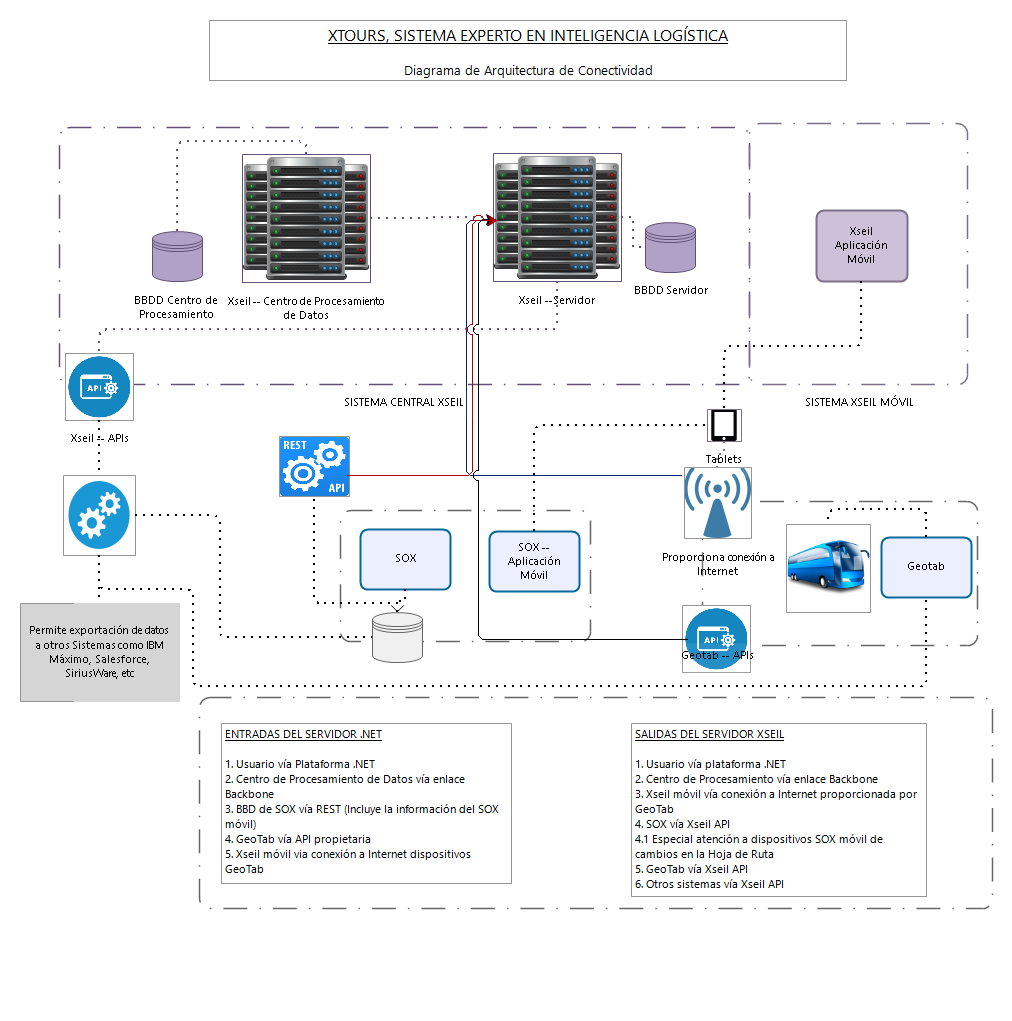
xSeil case-study illustration
Source: xSeil case study, Tegrity.AI.

1. Overall Architectural Structure

At a high level, the platform was organized into two main execution environments:

  • a central web-based operation and control subsystem
  • a real-time mobile route subsystem for field execution

The core architecture was specified around:

  • Linux / POSIX server environment
  • Python 3 for large-scale processing and algorithmic logic
  • Django as the web application framework
  • PostgreSQL as the main data platform for large data volumes, complex processing, and future scalability

The central subsystem was designed to provide shared access across the organization through a web environment, with support for up to 250 concurrent users in the first year. The mobile subsystem extended the platform into the field through Android and iOS devices for guides, drivers, and operational users.

In architectural terms, JUBAP.Net © xSeil can be understood as a layered system:

  1. Integration and data normalization layer
  2. Operational master data and control layer
  3. Planning and optimization layer
  4. Execution and monitoring layer
  5. Dynamic adjustment and coordination layer
  6. Managerial intelligence and reporting layer

2. Integration and Data Normalization Layer

A critical architectural element was the integration layer.

JUBAP.Net © xSeil did not operate on clean, internally generated data. It depended on continuous ingestion of operational data from SOX and other operational sources, later extended toward SOA-style connectivity rather than direct database access.

The required interfaces covered a broad operational model, including:

  • units
  • hotels
  • services
  • hotel routes
  • pickup schedules
  • reservations
  • operations
  • operation details
  • return operations
  • mobile operation records

This layer performed not only connectivity but also validation and normalization. The documentation makes explicit that JUBAP.Net © xSeil would reject inconsistent operational structures, including:

  • duplicate hotel names
  • duplicate or invalid vehicle identities
  • reservations not linked to valid hotel, park, and pickup configurations
  • mismatches between manual planning and reservation data

In practice, this layer functioned as a middleware / ETL / cleansing layer between fragmented transactional systems and the logistics intelligence engine. This is architecturally important because planning quality depended directly on data quality, and the platform was explicitly designed to absorb, clean, and structure inconsistent operational inputs before optimization. The technical annex also defines normalization and ETC-style communication with other systems as a formal component type of the solution.

3. Operational Master Data and Fleet Readiness Layer

On top of the integration layer, JUBAP.Net © xSeil maintained the operational structure required for planning and control.

This included catalogues and internal data structures for:

  • vehicle types and vehicle categories
  • available units and rented units
  • hotels, routes, parks, services, and zones
  • pickup hours and SLA tolerances
  • transfer points, nodes, and geofences
  • passengers and passenger groups
  • times between points and boarding-time logic
  • user, guide, and driver structures
  • route sheets and operational roles

A particularly important subsystem was the preceptoría / fleet readiness layer, which tracked:

  • maintenance status
  • operational status
  • service role of each unit
  • unit availability for planning
  • workshop-related conditions
  • historical maintenance patterns and related reporting

This means the architecture already embedded the practical reality that planning could not be isolated from fleet readiness. Vehicle assignment quality depended not only on passenger demand, but also on maintenance state, private operation status, role configuration, and actual unit availability.

4. Planning and Optimization Layer

The core planning engine was only one layer of the wider platform.

This layer generated and evaluated alternative planning scenarios for Xtours operations, balancing load factor, punctuality, directness, travel structure, and vehicle policies. The documentation explicitly states that the system could generate different planning scenarios and evaluate them under a high number of rules and methods, exceeding one hundred operational rules in some descriptions.

Documented planning outputs included:

  • unit list for service
  • passengers transported by route
  • factor of occupancy
  • percentage of direct trips
  • expected SLA compliance
  • planning process time

The planning layer also included:

  • rental estimation, projecting demand and suggesting third-party vehicle needs
  • schedule optimization, proposing improved pickup schedules
  • support for different service types and different planning parameters by service
  • support for hotel blocks, dynamic transfer policies, ad hoc transfer centers, slow-transit hours, saturation logic, and special conditions such as wheelchair seating rules

Architecturally, this shows that the optimization layer was not a pure route solver. It was a configurable planning engine embedded in a broader operational model.

5. Execution and Real-Time Monitoring Layer

JUBAP.Net © xSeil was also designed as an execution-aware platform.

Field users — primarily guides and drivers — authenticated through mobile devices, validated assigned units, captured boarded passengers, and later received route changes or transfer instructions. Android and iOS clients were explicitly planned as part of the architecture, along with mobile connectivity, field validation of assignments, and automatic connectivity tests.

GeoTab integration provided:

  • route and positioning data
  • geofence events
  • exceptions and operational monitoring inputs

This enabled the platform to compare:

  • planned operation
  • actual movement
  • actual boarding
  • actual punctuality

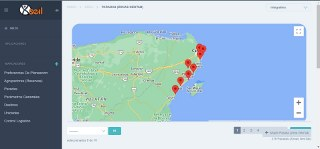
That comparison was surfaced through the Control Logístico intelligent screen, which displayed:

  • map of the operating region
  • real-time location of units
  • passenger counts by hotel and by destination
  • assigned units
  • route visualization
  • promised vs actual pickup times
  • punctuality performance by unit
  • direct vs transfer-based movements

So the system was not only computing plans overnight. It was creating a real-time feedback loop between planning, field execution, and operational control.

6. Dynamic Adjustment and Coordination Layer

A further architectural layer handled what happened after execution diverged from plan.

This included:

  • estimated time of arrival logic across routes and pickup points
  • dynamic route sheet updates in response to no-shows, go-shows, and operational incidents
  • transfer center coordination for passenger exchanges between units
  • reassignments for guides, drivers, and units
  • copiloto / travel assistant logic to calculate target cruising speed and reduce congestion at park entrances

These modules are architecturally significant because they convert JUBAP.Net © xSeil from a planning platform into a closed-loop adaptive operating system.

The system was designed not only to plan, but to:

  • detect deviations
  • update route logic
  • redistribute passengers
  • coordinate transfers
  • rebalance field execution
  • protect punctuality and arrival flow in real time

That is a fundamentally different architecture from a static optimizer.

7. Managerial Intelligence and Reporting Layer

The final architectural layer converted execution data into management information.

The system included a managerial decision support module with reports and dashboards on:

  • punctuality by unit, driver, route, hotel, and destination
  • route compliance
  • possible deviations from standard behavior
  • vehicle speed compliance
  • reassignment histories
  • operational delays
  • maintenance and rental-related indicators

This confirms that JUBAP.Net © xSeil was intended not only for operational dispatching, but also for governance, supervision, and managerial control.

8. Technical Runtime Characteristics

The documented technical stack evolved during the project.

In the main architecture and requirements documentation, the platform is consistently described around Python, Django, PostgreSQL, Linux, web services, and mobile clients.

In later production performance notes already reflected in your draft, the runtime behavior also included a more compute-intensive processing profile using elements such as:

  • application-layer orchestration
  • ORM/database interaction
  • large in-memory processing
  • multithreading
  • statistical and optimization processing
In summary

Consolidated Architectural Interpretation

In enterprise architecture terms, JUBAP.Net © xSeil was a modular logistics intelligence platform composed of:

  • a web-based command and control core
  • a mobile execution layer
  • a data integration and cleansing layer
  • an operational master-data layer
  • a planning and optimization engine
  • a real-time monitoring layer
  • a dynamic reconfiguration layer
  • a managerial intelligence and reporting layer

Its purpose was to bridge fragmented systems, normalize inconsistent data, generate planning scenarios, monitor live execution, dynamically reconfigure routes and transfers, and support both field coordination and management control across the full transport operation lifecycle. It should therefore be understood not as a «VRP tool,» but as an integrated mission-critical logistics operating platform.


The approach

3. Managing VRP Complexity: A Stability-Driven, Pre-Agentic Approach

Conceptual Overview

Before detailing individual modules, it is important to clarify that the system did not approach the problem as a classical routing optimization task. Instead, it operated as a centralized, stability-driven allocation system, which can be interpreted retrospectively as pre-agentic, although this terminology was not used in the original implementation.

In the actual system, the core entities were not defined as «agents» or «clusters,» but as operational constructs such as reservations, groupings (agrupadores colaborativos), combinations (solution space exploration), and pickups (selected high-quality assignments). The agent-based interpretation is therefore conceptual, used here to explain behavior, not to describe the original code structure.

At runtime, planning was fully centralized. A single system evaluated the full state of the operation and made decisions globally, optimizing across all reservations simultaneously. There was no distributed or edge-based decision-making. However, the logic implicitly treated each reservation as an individual decision unit whose utility needed to be maximized under shared constraints.

At its core, the problem was not routing vehicles, but allocating constrained service quality (capacity, punctuality, route structure, transfer avoidance, vehicle type) across thousands of competing and partially cooperating reservations.

Each reservation (passenger) behaved as a decision unit:

  • competing for limited resources (seats, time windows, route structure, vehicle quality),
  • while also being able to cooperate with compatible reservations (same destination, timing, corridor), which in the system were materialized through agrupadores colaborativos.

This led to an implicit hierarchical structure:

  • individual reservations →
  • cooperative groupings (agrupadores) →
  • selected pickups (high-quality assignments with minimal trade-offs)

What is described here as «low-propagation clusters» corresponds, in the original system, to stable pickup structures, meaning combinations of reservations that could be assigned together without generating significant downstream disruption.

The objective was not to globally optimize the full system in a single step, but to progressively structure the solution space, identifying stable combinations early and reducing the need for costly recomputation across the network.

At the same time, the system operated under three governing principles:

1Feasibility over optimality.

Hard constraints (capacity, punctuality commitments) could not be violated, so optimization was always subordinated to operational viability.

2Dynamic prioritization.

Objectives were not fixed; their relative importance evolved continuously based on system state.

3Propagation awareness.

No decision was isolated; each allocation reshaped the feasible space of all others, requiring explicit control of cascading effects.

Within this framework, the modules described below do not operate independently. They form a coherent decision logic:

  • first defining a safe operating envelope (fragility and capacity),
  • then establishing contextual priorities (dynamic pricing),
  • then evaluating solutions (global utility),
  • and finally structuring resolution through cooperative grouping and progressive stabilization of assignments.

The result is not a solver in the classical sense, but a centralized decision system that continuously navigates a constrained, dynamic, and propagation-sensitive allocation space under real operational pressure, approximating what would today be described as a multi-agent system, but implemented through deterministic and heuristic logic.

xSeil case-study illustration
Source: xSeil case study, Tegrity.AI.
Module 1

Fragility as a Capacity Signal

Fragility is modeled as an operational indicator of system risk under perturbation.

It is defined through two components:

a. Probability of Anomalies

The likelihood that the system will experience unexpected events, such as:

  • no-shows
  • late arrivals
  • last-minute demand
  • traffic disruptions
  • execution inconsistencies

This probability depends on multiple contextual factors, including:

  • seasonality and day type
  • weather conditions
  • demand volume and recent patterns
  • prior-day anomalies and carry-over effects

This component can be estimated using standard machine learning approaches.

b. Propagation Probability

The likelihood that a local anomaly will generate cascading effects across the system.

This depends on the internal state, including:

  • capacity saturation (vehicles close to full)
  • congestion levels
  • accumulated delays
  • reduced flexibility in routing
  • tight coupling between assignments

It was estimated using heuristics + ML for incremental learning.

2. Fragility as a Combined Measure

Fragility emerges from the combination of both components:

In practice:

  • high anomaly probability alone is not critical if the system can absorb it
  • high propagation sensitivity alone is not critical if anomalies are rare

But when both increase:

the system becomes fragile.

3. Capacity Management Layer

Fragility is not only monitored — it is used to drive capacity decisions.

This layer acts as an early warning and control mechanism:

  • it identifies when and where the system is approaching unsafe conditions
  • it signals the need for additional capacity or operational slack

This may include:

  • adding extra vehicles (rented, reassigned units or dealing predictive maintenance)
  • increasing buffer in routing decisions
  • reducing tight coupling between assignments
  • limiting aggressive optimization strategies

In other words:

fragility defines where the system needs reinforcement.

4. Role in a Mission-Critical System

This layer is fundamental because:

  • the system operates under hard constraints (e.g. capacity, punctuality commitments)
  • failure to meet these constraints is not acceptable
  • optimization must always be subordinated to feasibility

Therefore:

Capacity management is not an optimization feature — it is a safety mechanism.
Module 2

Resource Pricing — Dynamic Pricing of Objectives

Before attempting to compute a routing or re-planning solution, the system must first determine what should be prioritized under the current operational state. In a system with multiple conflicting objectives, this cannot be handled through fixed weights. Instead, the system introduces a dynamic pricing mechanism, where price acts as the internal currency used to allocate operational effort.

In practical terms, the system must answer a simple question: how expensive is it, right now, to improve a given objective? This is modeled through demand-supply style marginal pricing functions. Each objective — travel time, fuel consumption, number of stops, direct trip versus transfer center usage, pickup punctuality, arrival punctuality, occupancy level, or compliance with vehicle-use policies — has a current price that depends on the state of the operation, not on a fixed rule defined in advance.

This matters because these objectives are frequently in conflict. Reducing travel time may increase fuel consumption. Minimizing the number of stops may worsen occupancy or force more transfers. Protecting pickup punctuality may harm arrival distribution at the parks. Sending a direct trip may improve service quality but consume scarce vehicle capacity that would otherwise stabilize the wider network. Even vehicle-type compliance can shift in importance: under normal conditions it may behave as a strong policy preference, while under disruption it may become less important than preserving punctuality or avoiding service failure.

The model therefore does not treat all objectives equally at all times. Some behave as rigid constraints, while others are semi-flexible and context dependent. At a given moment, delay may become very expensive because accumulated lateness is exhausting time buffers; fuel may remain relatively cheap because autonomy margins are still safe; reducing stops may or may not matter depending on route saturation; and using the transfer center may be either efficient or undesirable depending on current congestion and load distribution.

Formally, each objective i is associated with a demand curve Di(x) and a supply curve Si(x), where x is a state-pressure variable for that objective. A simple linear form is often sufficient:

Di(x) = ai + bix   ·   Si(x) = ci − dix

When stronger nonlinear behavior is needed near critical regions, the same logic can be expressed with a quadratic form:

Di(x) = ai + bix + eix²   ·   Si(x) = ci − dix − fix²

The current cutoff point is obtained by solving Di(x*) = Si(x*). This is trivial computationally: in the linear case it is a direct division, and in the quadratic case it is a standard second-degree equation. This makes the pricing layer very cheap to recompute, since it operates only on a small number of aggregate state variables before the combinatorial search begins.

This also greatly improves explainability. Instead of relying on opaque scoring, the system can express decisions in operational language: punctuality was prioritized because delay pressure had crossed its tolerance threshold; fuel was deprioritized because its current marginal cost remained low; direct trips were restricted because transfer-center usage was temporarily more efficient for preserving network stability. Once these prices are established, the downstream optimization becomes much cleaner, because candidate decisions are no longer compared through static abstract weights, but through current, state-dependent marginal costs.

Module 3

Global Utility Evaluation and Stopping Condition

Once local utilities have been defined, any candidate solution can be evaluated through a single aggregated metric: global utility. Each assignment — routes, allocations, transfer decisions, or re-planning actions — produces gains in some objectives and losses in others, and these are combined into one comparable score.

This creates a unified framework for both mission-critical feasibility and continuous optimization. Hard constraints are modeled as prohibitive negative utility, effectively invalidating a solution. Examples include allowing passengers to travel standing, leaving committed passengers uncollected, violating seat capacity, or generating assignments that are operationally infeasible under route or vehicle restrictions. These are not treated as ordinary trade-offs, but as near-infinite negative outcomes that the system must avoid.

Soft or semi-flexible constraints are handled differently. Travel time, number of stops, transfers, fuel use, occupancy balance, or park-arrival distribution can all be improved or degraded with different marginal impacts depending on the current state. This allows the system to optimize continuously inside the feasible region, while still preserving mission-critical service commitments.

The main role of global utility is not to chase a theoretical optimum, but to measure how good or bad the current solution is at system level. As long as there is available time and computational budget, the system can continue improving the solution. But when decisions must be made quickly, or when operational or computational resources become scarce, the same metric provides a practical stopping condition: the system can stop once utility is high enough, or once further search is no longer worth the cost.

In that sense, global utility serves both as an optimization target and as a control signal under pressure. It allows the system to combine mission-critical feasibility with incremental optimization, always knowing whether the current solution is unacceptable, improvable, or already good enough to execute

Module 4

Agent Resolution Through Cooperative Groups and Operational Stability Partitioning

At solution level, the problem was treated as a multi-agent allocation system in which each reservation behaved as an agent competing for scarce operational resources: vehicle quality, route structure, pickup quality, transfer avoidance, travel time, and arrival quality. Because these resources were limited, improving the assignment of one reservation could directly reduce the feasible quality of the assignments available to others. In that sense, the system was not only routing vehicles; it was continuously resolving competition for scarce service quality under hard commitments and dynamic constraints.

However, reservations were not always purely competitive. In many situations, they had strong incentives to cooperate. Compatible reservations sharing destination, timing, corridor, and vehicle fit could be combined into cooperative groups, meaning sets of agents that no longer needed to compete internally because they could be optimized jointly. A typical example was a set of passengers going to the same park and fitting naturally into a direct trip: once such a coalition existed, treating those reservations independently would only increase complexity and reduce utility. The first reduction of the problem therefore came from identifying where cooperation was more valuable than competition.

This created a hierarchical planning structure. At the lowest level were individual reservations. Above that, the system formed cooperative groups: sets of reservations that could be planned together because they fit into the same local operational decision. Above groups, the system created low-propagation clusters, meaning sets of groups that could be treated as relatively self-contained subproblems because their decisions were unlikely to destabilize the rest of the network. This was not classical clustering in the data-science sense; it was a form of operational stability partitioning.

The key criterion was not geography by itself, but expected propagation. A cluster was useful when its internal optimization could be carried out with low disruptive impact on other clusters. In practice, this could happen for more than one reason. Some clusters were operationally isolated, meaning they were far enough from others that their decisions had little effect outside the cluster. Others were locally dense or internally resilient, meaning they were close enough or sufficiently supported by nearby slack that local perturbations could be absorbed without forcing wider system-wide reconfiguration. In both cases, what mattered was not physical shape but stability of consequences.

This distinction is important because the underlying problem could not realistically be solved through direct global optimization. The operation involved a very large combinatorial space, multiple conflicting objectives, and continuous perturbations from no-shows, late sales, congestion, and changing vehicle availability. A single local change could propagate into timing, capacity, route feasibility, transfers, and park-arrival distribution. Because of that, the practical strategy was to break the problem into areas where decisions could be fixed sequentially with limited downstream damage, instead of attempting a single global maximum over the entire network.

Cluster construction was therefore heuristic by design. The system did not assume perfect mathematical separability. Instead, it estimated practical separability using operational heuristics, supported where useful by machine learning. These heuristics included spare capacity buffers inside the cluster, relative distance from other clusters, the free capacity of nearby clusters, and the estimated probability that local changes would propagate outward. The aim was not to prove independence, but to identify subproblems stable enough to be solved locally without creating unnecessary global recomputation.

Once clusters had been formed, planning proceeded sequentially by stability. The system first solved the most independent or most stable cluster and locked its best trip structure. It then moved to the next cluster with the lowest expected interference with the already fixed ones, often selecting the farthest or least coupled cluster in propagation terms. Then it repeated the process with the next one, and so on, gradually assembling the full plan. This sequencing mattered because it reduced the active search space step by step while minimizing the probability of having to undo previous decisions.

This made the approach computationally tractable in practice. Instead of searching globally over all reservations at once, the system solved the easiest and safest parts first, where local optimization was least likely to create cascades. Early decisions were therefore not merely convenient; they were deliberately taken from the most stable regions of the problem. That allowed the planner to lock useful structure early and postpone the most entangled cases until the end, when more context was already fixed.

A major reason this could be done quickly was the use of decision memory. The architecture did not start from zero every time a cluster had to be planned. During available processing time, the system continuously preprocessed plausible scenarios, stored useful decisions, and ranked alternatives under different objective regimes. As a result, when a cluster similar to a previously explored one appeared, the search was often close to direct: the system already had candidate trip patterns, promising assignments, and prior information about which configurations tended to work well under similar conditions.

This was especially powerful in stable clusters. Once a cluster had been classified as low-propagation, the search for its best trip configuration could be very fast because much of the ranking work had already been done in advance. Instead of generating all alternatives from scratch, the system reused knowledge from similar group compositions, similar route patterns, similar load structures, and similar objective priorities. In practice, this turned part of the problem from blind combinatorial search into informed retrieval plus local adjustment.

As planning progressed, the easiest clusters disappeared first. What remained at the end were the difficult residual cases: problematic clusters, competing coalitions, shared scarce vehicles, cross-cluster interference, borderline feasibility, and situations where improving one area could still destabilize another. These cases were precisely the ones with the highest propagation risk and the weakest local separability.

At that stage, the system no longer behaved as if a perfect optimum were required. It continued searching only while the expected gain justified the remaining time and computational effort. In other words, the residual hard zone was handled under the same global utility logic described earlier: if there was time and capacity, the system kept optimizing; if operational pressure required action, it executed the best sufficiently good solution found so far. This is what allowed the architecture to combine mission-critical feasibility with continuous optimization in a live, constraint-saturated environment.

The arc. The system did not solve the network through direct global optimization.
It first formed cooperative groups,
then partitioned them into low-propagation clusters,
and finally resolved those clusters sequentially from the most stable to the most entangled, reusing precomputed decision memory wherever possible.
The Integral Management Society — IMSV
Stewarded by The Integral Management Society / IMSV.org. JubAp.Net · info@jubap.eu · tegrity.ai · jubap.net

This account describes a field-deployed system (2016–2017) and its architecture. The retrospective «pre-agentic» reading is a conceptual interpretation used to explain behaviour, not a description of the original code; the system was not an LLM-agent system, does not prove quantum advantage, and is not claimed to outperform current solvers.

From 1898 Communities of Practice to Operational AI Integrity

JUBAP.Net did not emerge as a conventional technology venture.

It was formed through a rare convergence of frontier communities of practice, distributed systems engineering, cultural transmission, operational training and mission-critical implementation. Its roots combine two worlds that are usually kept separate: the long-cycle transmission culture of The Integral Management Society’s historical lineage in the Totonacapan region since 1898, and the advanced distributed-systems capability inherited from Nokia and other high-performance technical environments.

This is why the JUBAP.Net story cannot be reduced to software, consulting, education or artificial intelligence. It is the story of a heterogeneous frontier group that learned to identify, integrate, form and coordinate hidden capability under real operational pressure.

Long before JUBAP.Net became associated with Operational AI Integrity, its foundations were already present in communities of practice where knowledge was transmitted through work, trust, precision and apprenticeship. In the Totonacapan, this included jewellery, watchmaking, optics, cultural preservation, practical engineering and territorial coordination. These were not isolated trades. They were living systems of transmission where people learned by doing, observing, adapting and preserving what could not be easily written down.

In the early 2000s, this historical lineage was modernised through Formación Integral, operating in Mexico under RFC VACC791202G11. Formación Integral was not simply an online learning platform. It functioned as an early distributed human and operational infrastructure: connecting instructors, learners, cyber-school nodes, practical enterprise experience and territorial knowledge transmission in a region where connectivity, access and institutional support were fragmented.

At the same time, the founder brought experience from Nokia R&D Barcelona, where distributed infrastructure, mobility systems, remote collaboration and operational continuity were part of the working environment. Formación Integral became the point where both lineages met: territorial transmission and advanced distributed systems engineering.

That convergence later evolved into Corbera Networks, GEPLAN and the operational intelligence work that now underpins JUBAP.Net.

Finding Talent Where CVs Don’t Go

One of the clearest examples of this school was Alejandro Gamboa.

Before joining the JUBAP.Net GEPLAN program, Alejandro was working on a factory line in Chihuahua. His talent for software and systems had no visible institutional channel in that environment. He was not part of the usual talent pools. No elite university, no global technology hub, no corporate fast-track had recognised him.

When he was invited to leave that environment and travel by bus to Papantla to join a logistics software project, it was not a standard recruitment decision. It was an act of operational talent recognition.

Papantla itself was not a neutral setting. It was a frontier city: dense, intense, commercially alive, culturally layered and operationally complex. In that environment, Alejandro became central to the JUBAP.Net GEPLAN development effort. His path showed something that would later become essential to the JUBAP.Net method: high-level engineering capability can exist far outside conventional talent channels, if someone knows how to recognise it and place it inside the right operational architecture.

Strategic Minds Out of Place

Another pillar of this invisible school was Luisa.

She had previously held a senior public-sector role in Venezuela. Political change forced her to leave and rebuild her life in Spain, where her institutional experience was no longer formally visible. Through Formación Integral and later JUBAP.Net GEPLAN, she re-entered the arena as strategist, administrator, trainer and operational advisor.

Her value was not technical in the narrow software sense. It was architectural in the human and institutional sense.

She could read people quickly, anticipate governance dynamics, understand resistance, translate ambiguity into procedures and stabilise teams under pressure. She became a bridge between technology and organisation, between process and people, between formal structure and the informal codes that actually determine whether a system works.

Without that kind of capability, GEPLAN would have been weaker. Not because the software would have failed, but because operational intelligence is never only software. It depends on the human architecture that allows information, trust and decisions to move correctly.

Integrating Local and Distributed Teams

The JUBAP.Net GEPLAN experience was also an early exercise in team integration.

Local presence was basic and indispensable. Developers, consultants and operational leads had to be close to the field, close to the control centres, close to the workshops, close to dispatchers, mechanics, supervisors and decision-makers. The team needed to understand the real environment, not only the formal process.

But the model was not only local. It also integrated distributed mobility teams, remote collaboration and the infrastructure required to support work across locations. For the time, this was highly advanced: telework, remote coordination, distributed technical support, field communication, operational follow-up and continuous system adjustment before these practices became normalised in most organisations.

This combination became one of the origins of the early agile tiger teams that later became typical of JUBAP.Net: small, intense, cross-functional teams capable of entering complex environments, understanding operational constraints quickly, adapting the system in short cycles and staying close enough to the field to avoid architectural abstraction.

At the time, the team did not call this “agile” in the modern corporate sense. The closest reference was extreme programming. But in practice, the team considered itself to be doing something broader than extreme programming: combining distributed work with maximum operational proximity.

It was not remote work as distance. It was distributed work with field intimacy.

Consultants Who Burned the Ships

The team also included people like Martín, seasoned regional consultant who left a senior position in a major firm and moved with his young children to join the project.

He became one of the main forces behind the standardisation effort, bringing clarity, calm and operational discipline to some of the tensest phases of the program. His role was not only to organise documents or processes. He helped give structure to a growing system where software, operations, governance and human behaviour had to align under pressure.

In practice, this created a group with very few easy exits: a team that had burned its bridges and committed itself to making JUBAP.Net GEPLAN work in an environment full of logistical, political, social and economic risks.

This shared exposure to risk became a powerful training ground in responsibility and systemic thinking. No classroom could have replicated it. No certification could have produced the same level of awareness. People had to understand how a change in a database field, a route, a procurement rule, a workshop process or a KPI could affect money, safety, trust, bonuses, suppliers, field operators and executive decisions.

This was not theoretical architecture. It was architecture with consequences.

A Larger School in Architecture and Governance

These names are only examples.

The real team was much larger. Many people contributed from different positions: developers, consultants, operators, administrative staff, mechanics, supervisors, trainers, dispatchers, field coordinators, suppliers, managers and external specialists. Some were visible. Many were not. The JUBAP.Net school of invisible talent is also a recognition of all those people whose work made the system possible.

What united these profiles — Alejandro, Luisa, Martín and many others — was not a common technical stack, a common résumé or a single professional origin.

It was a progressive immersion into systems architecture, organisational reengineering, governance and operational transmission.

They learned to see logistics not as routes and trucks, but as a living network connecting wells, plants, workshops, suppliers, communities, regulators, contracts, incentives and internal politics. They learned that a system is not only what appears on a screen. It is the relationship between information, behaviour, risk and trust.

In that school, diagrams were not academic exercises. They corresponded to real flows of oil, money, materials, maintenance, responsibility and power.

A misinterpreted KPI could affect hundreds of workers’ bonuses, distort contractor relationships, or mask fuel theft and operational sabotage. A weak control could hide theft. A poor process could create conflict between contractors. A badly designed report could mislead leadership. A missing operational rule could create cascading effects across the field.

Each member of the team had to understand, at their own level of responsibility, the consequences of every change in the system: from a database field to a minor process adjustment.

This is why the JUBAP.Net lineage treats transmission seriously.

Knowledge is not preserved only by storing documents. It is preserved through practice, observation, shared pressure, apprenticeship, disciplined repetition and the gradual formation of judgment. This logic connects the old communities of practice of the Totonacapan, the distributed educational infrastructure of Formación Integral, and the later operational intelligence work of GEPLAN.

The Fusion of Frontier and Elite Capability

The JUBAP.Net lineage is not a rejection of elite capability.

On the contrary, it integrates it.

Nokia-style distributed systems engineering, advanced technical architecture, international consulting discipline and high-performance operational standards were essential. But they were not enough by themselves.

What made JUBAP.Net unusual was the fusion of that elite capability with frontier transmission systems: people who understood territory, informal coordination, tacit knowledge, local trust, practical learning and the hidden intelligence of those who are often invisible to formal institutions.

That fusion produced a different kind of operational school.

It could work with software developers and field operators. With consultants and mechanics. With public-sector minds and factory-line talent. With cultural preservation and enterprise architecture. With high-level systems thinking and very practical local constraints.

This heterogeneity was not a weakness.

It was the source of the method.

Beyond “AI Talent”: What Operational AI Really Requires

Today, JUBAP.Net positions itself as a complex systems intelligence center specialised in Operational AI Integrity and early warning regime change detection.

Its thesis is clear: to build AI systems that truly understand and anticipate structural shifts in operations, institutions or territories, it is not enough to recruit classic “AI talent” with strong academic credentials and model-building skills.

The kind of integrity and sensitivity required for operational AI in critical environments demands people who have lived in the field, navigated risk, worked under ambiguous governance and engaged with real communities.

It calls for professionals who know what it means to defend a system in hostile conditions, infer hidden behaviours from imperfect data, and maintain discipline when incentives push in the opposite direction.

That is why the JUBAP.Net GEPLAN experience was more than a project.

It was a long, demanding apprenticeship in reading complex systems from the inside.

From Invisible Talent to Operational Integrity

The central lesson of this lineage is simple: intelligence is often hidden before it becomes visible.

It may be hidden in a factory worker who understands systems better than his environment allows. It may be hidden in a displaced institutional mind rebuilding life in another country. It may be hidden in a consultant willing to leave comfort and enter uncertainty. It may be hidden in artisans, operators, trainers, communities and field experts whose knowledge does not fit conventional innovation language.

JUBAP.Net learned to recognise that intelligence, place it inside operational structures, integrate it with distributed teams and transform it into systems capability.

In this sense, the JUBAP.Net GEPLAN experience trained a generation of invisible talent in the art of reading complex systems from the inside, while also shaping the early agile tiger team model that later became typical of JUBAP.Net.

That capability now underpins JUBAP.Net’s mission: designing intelligent infrastructures that can detect and interpret regime changes long before they appear in official narratives or dashboards.

That is why Operational AI Integrity does not begin with algorithms alone.

It begins with the ability to recognise hidden capability, transmit tacit knowledge, coordinate heterogeneous actors, preserve operational truth and design systems that remain trustworthy under regime change.

This is the real continuity between the communities of practice of 1898, Formación Integral, Nokia, GEPLAN and JUBAP.Net today.

The toolset has changed.

The scale has changed.

The discipline remains the same: frontier intelligence, transmitted through practice, engineered into systems, and preserved for the next regime of complexity.

GEPLAN — Mission-Critical Logistics Intelligence
JubAp.Net · Case Study

GEPLAN

TETSA hydrocarbon-transport operations, deeply integrated with PEMEX · Chicontepec, 2006–2010

Before Industry 4.0 became a global concept, one of the world’s most complex oil projects was already forcing the creation of real-time logistics-intelligence systems. GEPLAN integrated telemetry, fleet control, warehouses, maintenance, procurement and operational decision support years before these capabilities became common.

GEPLAN — mission-critical logistics intelligence, PEMEX Chicontepec
Source: GEPLAN case study, Tegrity.AI.

In the mid-2000s, PEMEX was operating in one of the most demanding industrial environments in the world. Mexico was not yet “Industry 4.0”, but large-scale oil, energy and logistics projects were already pushing the development of advanced telemetry, fleet control, remote operations, field intelligence and real-time coordination.

Chicontepec was one of the most ambitious unconventional oil projects globally, with more than 80 billion barrels in place and a scale comparable to some of the world’s largest tight oil plays. However, geological complexity, fragmented reservoirs, high drilling costs and operational challenges meant that it never achieved the production levels originally expected.

Even so, Chicontepec became an enormous learning laboratory. Many of the technologies, methods and operating models developed there anticipated later trends in industrial IoT, digital twins, logistics intelligence, predictive operations and Industry 4.0. In that context, JUBAP.net GEPLAN was not just a local system. It was an unusually advanced logistics intelligence platform for its time, integrating telemetry, fleet control, warehouses, procurement, maintenance and operational decision support years before these capabilities became common globally.

At a glance
~20,000
wells planned across Chicontepec
USD 37B
projected programme investment
4
integrated logistics control centres
~15-day
mission-critical delivery sprints
3 months
to first benefits — zero upfront CAPEX
Background & client

Background, Client and Executive Summary

Jubap.net (jubap.is) is the commercial name of The Integral Management Society SAS, a Mexican company with more than 20 years of experience in complex systems intelligence, mission-critical environments and operational decision support.

The organisation originally operated under the Corbera Networks brand in Latin America. It was created by a team with a background from the Nokia Research and Development center in Barcelona, and international experience in the United States and Canada from 2005 onward.

From NOKIA R&D to GEPLAN
From NOKIA R&D to GEPLAN. Source: Tegrity.AI.

The client for this project was TETSA (Transportes Especializados de Toluca S.A. de C.V.), a company that for many years had operated as the main hydrocarbon transport concessionaire for PEMEX in its northern region.

In practice, TETSA functioned almost as an embedded logistics arm within PEMEX operations. Its teams, vehicles, workshops and control centres were deeply integrated into the day-to-day operation of transport, maintenance, field coordination and production support.

In 2006, PEMEX was engaging in the Chicontepec Megaproject — one of the most ambitious energy development programmes of its time — combining multi-billion-dollar investment, projected development at massive well count, technically difficult reservoirs and a highly experimental operating environment.

Conventional logistics models were not sufficient. The operation required a real-time intelligence layer capable of integrating information across contractors, maintenance activity, field execution and changing production realities, so logistics could continuously adapt to evolving operational conditions.

JUBAP.net GEPLAN was designed and implemented as an integrated platform connecting logistics, maintenance, inventory, procurement, telemetry and operational estimation in a single environment. The platform included:

  • Real-time vehicle tracking and satellite communications
  • Logistics planning and dispatch coordination
  • Workshop, preventive and predictive maintenance
  • Inventory, warehouse and spare parts management
  • Procurement and supplier workflows
  • Consignment inventory with third-party suppliers
  • Production estimation and operational analytics
  • Integration with PEMEX logistics and operational processes
  • Dashboards, alerts and decision-support capabilities

Unlike traditional transformation programmes, GEPLAN was not designed as a large upfront investment requiring major CAPEX approval. It was conceived jointly by TETSA and our team as a gradual initiative to create unique value for PEMEX and strengthen the operational symbiosis between TETSA and PEMEX logistics.

The programme was intentionally designed to grow incrementally, validating each capability before expanding into the next one. It started with warehouse stabilisation, inventory clean-up and basic operational controls. Each improvement generated measurable operational and financial benefits, which funded the next phase: purchasing, remanufacturing, workshop intelligence, predictive maintenance, logistics and finally deeper integration with PEMEX. Positive benefits appeared within the first three months and were continuously reinvested into the next sprint.

GEPLAN eventually became more than a logistics platform. It became the operational backbone connecting transport, maintenance, field operations and decision-making across one of the most complex industrial environments in Mexico.


Operating context

PEMEX / Chicontepec (2005–2008): geological complexity and megaproject scale

Proyecto Chicontepec - PEMEX
Proyecto Chicontepec — PEMEX. Source: Tegrity.AI.

At the time, unconventional oil was beginning to reshape the global energy industry. Advances in horizontal drilling, hydraulic fracturing, telemetry and industrial control were making it possible to extract hydrocarbons from reservoirs that had previously been considered too difficult or too expensive to develop.

For Mexico, Chicontepec became one of the country’s most important strategic energy projects. At the same time that Cantarell — which had reached more than 2.1 million barrels per day in 2004 and represented close to two-thirds of Mexico’s oil production — was entering irreversible decline, Chicontepec was expected to become one of the main future sources of national production, fiscal income and energy security.

Chicontepec contained one of the largest accumulations of hydrocarbons in the world, with tens of billions of barrels of original oil in place and very large probable reserves. However, unlike Cantarell, the oil was trapped in highly fragmented sandstone formations with very low permeability, low pressure and complex internal geology.

This created a completely different economic model from conventional oil fields. In Cantarell, individual wells could produce between 5,000 and 15,000 barrels per day. In Chicontepec, many wells produced only around 100 to 300 barrels per day. To compensate for this, PEMEX planned to drill approximately 20,000 wells with an estimated investment of around USD 37 billion, with the objective of replacing the decline of Cantarell.

Due to low well production and geographic dispersion, traditional pipeline infrastructure was often not economically viable. Instead, much of the operation depended on hydrocarbon transport by road, temporary routes and ad hoc access corridors built specifically for field operations. This made transport, logistics coordination and operational visibility much more critical than in conventional oil environments.

The overall programme was highly experimental. New drilling methods, transport routines, production models and logistics capabilities had to be tested continuously in the field. Small operational failures could quickly translate into major production losses, environmental incidents or costly delays.

An unstructured industrial environment

Unlike mature industrial environments with stable infrastructure and predictable operating conditions, Chicontepec operated in a constantly changing environment.

  • Roads were often little more than jungle tracks and rural access paths between dispersed communities, many being opened, expanded or modified specifically for the project
  • Road conditions changed daily depending on weather, mud, heavy equipment traffic and field activity
  • Some operational zones remained only partially mapped
  • Satellite communication was not ubiquitous and had to be actively integrated with operational systems; many mobile units did not have permanent access
  • Communication depended on a multi-channel mix of Omnitracs, radio, push-to-talk, partial cellular networks, informal relays, local supervisors and word-of-mouth across multiple entities
  • Production per well was highly variable
  • Storage capacity and remaining volume in tanks often lacked accurate metrology
  • Absorption capacity at turbocompressors varied depending on crude density and operational conditions
  • Incidents were frequent and frequently occurred simultaneously across different parts of the network
  • Visibility of production, road conditions, fleet position, tank levels and transport availability was often partial, delayed or inconsistent without a single source of truth
  • A failure could result in an environmental spill, operational shutdown or a multimillion-dollar interruption

Further operational complexity

The logistics challenge was far broader than crude oil from wells to separation batteries. It involved moving:

  • Heavy machinery required to keep wells and field operations running
  • Drilling fluids and other specialised materials
  • Equipment for maintenance, recovery and emergency interventions
  • Oversized loads requiring specialised manoeuvres and route coordination

The scale of heavy transport alone was enormous. Every day, the departure from Poza Rica city resembled a coordinated procession of heavy equipment extending for dozens of kilometres in multiple directions. Tankers, cranes, lowboys, drilling equipment, workshop vehicles, maintenance teams and support units had to move simultaneously across a fragmented and unstable territory.

Coordination had to be extremely precise. A delay, blockage or incorrect sequence in one convoy could create cascading effects across multiple routes, loading points, wells, workshops and receiving facilities. Crude transport itself was not a minor operation. The volumes involved represented most of the production of a territory comparable in size to a medium-sized European country. Managing this flow required constant balancing between production, storage, transport capacity, receiving capacity and operational risk.

Limited digital maturity

During the 2005–2008 period, concepts such as Industry 4.0 or Digital Transformation were not yet part of the vocabulary. Field staff and transport operators had limited exposure to digital tools. Most reporting depended on paper logs, spreadsheets and manual coordination.

This model had been broadly sufficient for the smaller-scale operations that existed before the megaproject. Operators knew the roads, routes, communities and local conditions from years of experience, and much of the operation depended on tacit knowledge and local relationships. However, as new roads were being opened continuously, the previous way of working was no longer enough. It required an entirely new suite of tools capable of supporting decisions.


Development style

From Tiger Teams to an early scaled-agile model

Jubap.net - Operations-Embedded Development
Jubap.net — Operations-Embedded Development. Source: Tegrity.AI.

The Tiger Team

As the design had to evolve constantly due to the experimental nature of the megaproject, there was never a complete feature backlog. Therefore, we defined a model based on two-week sprints, with programmers and engineers embedded directly in the control centres or in the field. It was a disciplined mission-critical agile development style — more like a Tiger Team (a concept used in Apollo 13): small multidisciplinary teams working directly inside the operation, solving problems in real time and adapting the system continuously without compromising operational continuity.

Expert systems approach

The operational intelligence approach was based on rules, heuristics and what at the time were commonly called expert systems. That knowledge could not be invented centrally. It had to be acquired directly from operators, dispatchers, mechanics, supervisors and field personnel who understood the real constraints of the operation. Over time, this knowledge was translated into structured rules, scenarios and decision logic, supported by disciplined libraries of documents, procedures and approved rule versions that were continuously reviewed, consolidated and maintained.

The symbiotic user interface

In this environment, many operators were not digitally prepared. Information had to be heavily digested and presented in a very intuitive way. The platform aggregated fragmented information, applied predefined logic, highlighted risks and priorities, and presented operational data through simple dashboards and large action buttons where the most important information was immediately visible. Operators were not expected to navigate through multiple menus, apply filters or search for information. The system had to make decisions easier, faster and more reliable under pressure.


Technology & architecture

Technology stack and system architecture

GEPLAN was designed as an integrated industrial platform combining logistics, maintenance, inventory, procurement, telemetry and operational estimation within a single environment. The architecture was built around a central operational database and a modular ERP-style environment, connected to satellite systems, control centres and field operations.

Core technology stack

  • Delphi-based application layer
  • Microsoft SQL Server and MySQL databases
  • Omnitracs satellite communications and fleet tracking
  • Desktop interfaces for dispatchers, maintenance teams and control centres
  • Real-time operational macros and event triggers
  • Reporting and dashboard capabilities
  • Workflow-based approvals and status transitions
  • Integration with PEMEX operational environments

Core operational platform

GEPLAN was not a standalone logistics application. It operated as a central platform integrating logistics planning, fleet control, workshop and maintenance, inventory and warehouse, procurement and supplier management, and production estimation. The system functioned as a shared operational environment between TETSA, field operations, workshops, suppliers and PEMEX.

Real-time telematics and operational tracking

A critical component of the architecture was the integration with Omnitracs and satellite-based communication systems. This enabled real-time vehicle tracking, route monitoring, driver communication, field coordination in remote areas, visibility of unit status and manoeuvre execution, and operational alerts and exception handling.

GEPLAN - Logistics Order Status
GEPLAN — Logistics Order Status. Source: Tegrity.AI.

Each kind of operation was broken down into multiple stages and checkpoints, creating full traceability for every movement; this allowed operations teams to identify exactly where delays, bottlenecks or failures were occurring in real time.

Asset lifecycle management

GEPLAN did not only manage logistics. It managed the full lifecycle of operational assets, especially transport units.

Workshop and maintenance intelligence

The workshop module included preventive maintenance, corrective maintenance, investment-based maintenance, scheduling by time and mileage, full maintenance history, real-time unit status, and visibility of delays and workshop backlog.

A particularly valuable feature was the estimation of workshop exit time for each vehicle.

This gave operations teams visibility into units currently in workshop, expected return-to-service date, operational readiness, and fleet availability for future assignments. This created a direct link between maintenance, availability and logistics planning. Maintenance status was not isolated from operations; it directly influenced route planning and dispatch decisions.

Warehouse and extended supply chain

The warehouse module was tightly integrated with maintenance and logistics. It included stock control, inventory movements, spare-parts assignments, linkage to maintenance orders, linkage to vehicles and operational units, warehouse requests, procurement requisitions and supplier-fulfilment workflows.

An advanced aspect of the model was the use of consignment inventory with external suppliers such as Kenworth.

This enabled visibility of third-party stock, hybrid ownership models, immediate access to critical spare parts, reduced downtime and faster repair cycles. It was an early form of vendor-integrated inventory management and extended supply-chain coordination.

Procurement and financial linkage

GEPLAN also included a procurement layer directly connected to operations: purchase requisitions, supplier-interaction workflows, procurement approvals, cost tracking, validation of operational purchases, and basic financial linkage to logistics and maintenance activities. Although it was not a full finance ERP module, procurement was directly connected to operational execution rather than managed separately.

JUBAP.net GEPLAN Communications Control Center Screen
JUBAP.net GEPLAN — Communications Control Center Screen. Source: Tegrity.AI.

Procurement decisions were linked to vehicle availability, maintenance demand and logistics priorities.

Planning layer vs execution layer

A major strength of the platform was the separation between planning and execution.

Planning layer

Origin and destination definition, volumes and priorities, route creation, assignment logic, capacity constraints, distances and travel times, waiting-time considerations, and operational restrictions.

Execution layer

Real-time vehicle tracking, driver communication, status transitions, route-execution monitoring, delays and exception handling, and full trip traceability. This effectively created a state-driven logistics execution engine.

Estimation and operational analytics

One of the most advanced components of GEPLAN was the estimation system. The platform combined operational inputs such as production per well, separation capacity, tank volumes, route distances, loading and unloading constraints, vehicle availability and workshop readiness. These generated operational outputs including transported volumes, real versus planned production, kilometres travelled, fleet utilisation rates, bottleneck identification, capacity constraints, and congestion and delay analysis.

This estimation layer became one of the few consistent sources of truth across logistics, production and transport performance, enabling analysis at project, regional, cross-field, supplier and fleet level.

This transformed GEPLAN into an early industrial data and operational-intelligence platform.

Integration with PEMEX

GEPLAN was not simply connected to PEMEX systems. It became embedded within PEMEX logistics and operational processes, enabling structured operational data exchange, validation of execution, reconciliation of transport activity, support for PEMEX planning decisions, integration with estimation and reporting processes, and shared visibility between TETSA and PEMEX. This created a form of B2B operational integration with direct dependency on shared information flows.

Final positioning

GEPLAN was not an ERP and not simply a logistics system. It became a logistics-orchestration platform, an asset-lifecycle-management system, a real-time telematics environment, a supplier-integrated supply-chain platform, an estimation-and-analytics engine, and a decision-support layer connected to PEMEX. In practice, GEPLAN functioned as an end-to-end operational-intelligence and execution platform for hydrocarbon logistics and production support, combining planning, execution, maintenance, supply chain, telemetry and operational estimation in a single integrated environment.


Operating-model transformation

From decentralised operations to centralised governance

GEPLAN could not be implemented without changing the operating model. The challenge was not only technological; it also required a complete redesign of governance, communication, decision-making and operational coordination. Before GEPLAN, the organisation worked through what were formally called “departments”, but in practice these behaved as largely independent companies.

Communication was based on prior-day documents, manual coordination, radio communication, informal escalation, and local supervisors with fragmented priorities. This created delayed reactions to operational changes, decentralised decision-making, low visibility across the operation, conflicting priorities between areas, strong dependency on local knowledge, and limited ability to coordinate logistics, maintenance and field operations at scale.

GEPLAN required a fundamental shift from fragmented local control to centralised operational governance. The new model introduced centralised operational control, real-time coordination across all entities, faster response to incidents and operational changes, continuous prioritisation based on live data, and shared visibility across logistics, maintenance and field operations.

Operations were coordinated through four integrated logistics control centres — Costa Rica, Tinajas, Altamira and the PEMEX logistics control centre. These centres operated on the same platform, shared the same operational information and worked under a common decision framework.

GEPLAN integrated logistics control centres
Source: GEPLAN case study, Tegrity.AI.

JUBAP.net GEPLAN became the core operational layer connecting all control centres. The other operational entities continued to exist as separate businesses, but their daily activities became coordinated through the control-centre structure. Operators no longer followed only the instructions of local supervisors; daily execution was increasingly driven by the integrated logistics-control model.

Process design and certification

The implementation of GEPLAN required the formal design, documentation and standardisation of operational processes: end-to-end logistics processes, maintenance and workshop processes, procurement and warehouse processes, incident-management workflows, operational-escalation procedures, decision rights and approval flows, reporting and traceability mechanisms, and roles and responsibilities across entities.

This process layer supported certification and audit readiness across multiple management standards, including ISO 9001 for quality management, OHSAS 18001 for occupational health and safety, and ISO 14001 for environmental management. The process model became a critical foundation for scaling operations, improving auditability and reducing dependency on informal practices.

JUBAP.net GEPLAN was not only a technology platform. It was also a process and governance transformation programme.

Human-in-the-loop decision architecture

GEPLAN was intentionally designed not to automate operational decisions completely. At the time, the complexity of the environment and the variability of field conditions made full automation impractical and potentially risky.

Human intelligence was prioritised over system automation. The system accelerated human decision-making rather than replacing it.

The role of the system was to aggregate and clean operational data, process information from multiple sources, highlight incidents and bottlenecks, suggest possible actions, present structured operational insights, and support faster and better decision-making. However, the system did not assign orders automatically and did not take final decisions. Operators in the control centres remained responsible for reviewing the situation, evaluating trade-offs, making final decisions, assigning transport orders, and escalating conflicts and priorities.

Expert system and decision support

Although GEPLAN was not an AI platform, it included expert-system characteristics: rule-based logic, predefined operational indicators, suggested actions, early warnings, prioritisation logic and pre-evaluated scenarios. These were designed to accelerate decisions, identify risks and support operators during incidents. However, the final decision always remained with the human operator.

Incident management as a core function

GEPLAN was designed around continuous incident handling. In this environment, disruptions were not exceptional — they were expected: delays, vehicle breakdowns, tank saturation, route disruptions, communication failures, maintenance conflicts, capacity constraints and weather-related incidents. The control centres functioned as real-time incident-management hubs, detecting issues quickly, understanding their impact across the wider system and coordinating the appropriate response.

Structured operational orders

Orders within GEPLAN were not simple dispatch instructions. Each operational order included multiple dimensions: assigned vehicle, assigned driver, origin point, destination point, assigned tank, separation battery, queue position, estimated loading time, estimated unloading time, estimated waiting time, estimated travel time, estimated arrival time, operational restrictions and priority level. This created fully structured operational instructions rather than basic trip assignments.

Trade-off management

One of the most important functions of the control centres was the continuous management of trade-offs. Operators constantly balanced maintenance versus operational continuity, fleet availability versus reliability, efficiency versus risk, urgency versus safety, and short-term execution versus long-term stability. For example, delaying maintenance could increase fleet availability in the short term but also increase risk of failure; prioritising maintenance could improve reliability but reduce immediate operational capacity. These trade-offs became visible in the system, were evaluated centrally and were resolved dynamically by operators.

GEPLAN did not simply digitise logistics. It enabled a transition from fragmented, semi-analog operations to a centrally coordinated operating model, in which decisions remained human, execution became system-supported, coordination became real time, governance became centralised, processes became standardised, and operations became auditable and scalable. It became the operational backbone for logistics, maintenance and field coordination across one of the most complex industrial environments in Mexico.


Zero-CAPEX delivery

A self-financed, incremental delivery model

One of the strongest aspects of the GEPLAN case was that it was not implemented through a large upfront investment programme. The transport concessionaire, TETSA, was under constant pressure to maintain operational continuity and retain its contracts with PEMEX. There was no realistic CAPEX available for a large-scale digital transformation. As a result, the programme was designed as a bottom-up, self-financed transformation model. Instead of starting with the most complex areas, the work began where the fastest operational improvements could be achieved.

1Warehouse stabilisation and inventory control.

Inventory accuracy was poor and losses were common. The focus was on stabilising the physical operation: cleaning and reorganising the central warehouse; improving shelving, storage logic and controls; cleaning master data and inventory records; adding safeguards around the legacy software; and rebuilding confidence in stock accuracy. These small improvements immediately reduced losses and improved service levels.

2Extended warehouse management and consignment model.

Once inventory reliability improved, suppliers agreed to leave parts on consignment instead of requiring immediate payment, monitoring usage and replenishing on actual consumption. This lowered cash tied up in inventory, gave faster access to critical parts, improved supplier relationships and improved liquidity — releasing budget to reinvest.

3Remanufacturing and purchase optimisation.

Instead of discarding damaged components or buying new immediately, used parts were routed to local workshops for repair and remanufacturing, then returned to inventory at much lower cost. This supported a more advanced purchasing model: demand forecasting, better purchasing visibility, improved supplier coordination, fewer emergency purchases and reduced waste.

4Workshop intelligence and predictive maintenance.

Beginning with preventive planning, service intervals and availability forecasting, the model evolved into early predictive maintenance: anticipating failures, identifying failure patterns by route and terrain, forecasting component-replacement cycles, improving scheduling and increasing availability. This phase created some of the largest operational benefits.

5Administration, logistics and PEMEX integration.

Only after the previous layers were stable did the programme move into logistics: GPS and vehicle tracking, route and trip management, order management, budget control, integration with PEMEX logistics, and real-time coordination between transport, maintenance and field operations.

The programme also had a visible social impact inside TETSA. Part of the operational gains was reinvested into better working conditions for employees — better bonus structures, improved working conditions, new canteen facilities, better accommodation for drivers and field staff, and reduced operational pressure through better planning. This improved morale, reduced turnover and strengthened service quality.

As the system demonstrated measurable results, TETSA strengthened its position with PEMEX. GEPLAN eventually became a competitive differentiator in new contracts and was later accepted by PEMEX itself as a valuable operational model. From that point onward, parts of the system were progressively integrated into PEMEX logistics and operational processes.

Agile funding logic

The entire programme operated through short delivery cycles. Each sprint lasted approximately 15 days and focused on a very specific operational bottleneck. Every improvement generated measurable savings, service improvements or cash-flow benefits that unlocked funding for the next sprint. This meant the programme could continue growing without requiring a large initial CAPEX investment.

GEPLAN was not funded through a traditional investment programme. It was funded through its own operational results — delivering positive benefits within the first three months.

Current relevance

An early blueprint for complex-industrial operating models

Although GEPLAN was developed between 2007 and 2010, it can be seen as an early “proto-Industry 4.0” case. The platform was created before Cloud, IoT, smartphones, SaaS platforms and AI became standard industrial tools, yet it anticipated many of the concepts that today are considered central to digital transformation.

JUBAP.net GEPLAN implemented capabilities that are now widely recognised as best practices:

  • Integrated logistics control towers across multiple operational centres
  • Human-in-the-loop decision support instead of unreliable full automation
  • Mission-critical Agile delivery through embedded Tiger Teams
  • Predictive maintenance and asset intelligence
  • Vendor-integrated inventory and extended supply-chain visibility
  • Operational resilience designed for constant disruption, not ideal conditions

The most important lesson from the case is that the primary barrier to transformation is rarely the technology itself. The real challenge is creating visibility, governance, common processes and a shared operational language in environments where information is fragmented and local knowledge dominates. In Chicontepec, the value of GEPLAN came from creating a single operational source of truth across logistics, maintenance, inventory, procurement and field operations.

That challenge remains highly relevant today. Many organisations still struggle with departmental silos and conflicting priorities, heavy dependence on tacit knowledge, fragmented visibility and manual coordination, difficulty balancing efficiency, resilience and risk, and inability to fund large transformation programmes upfront.

The arc. GEPLAN addressed these problems almost two decades ago through an incremental, self-funded and highly operational approach.
It created a single operational source of truth across logistics, maintenance, inventory, procurement and field operations.
It kept decisions human while making execution system-supported, coordination real time and governance centralised.
It should be viewed not only as a historical project, but as an early blueprint for many of the operating models and decision-support systems now used in complex industrial environments.
The Integral Management Society — IMSV
Stewarded by The Integral Management Society / IMSV.org. JubAp.Net · info@jubap.net · jubap.net

Historical account of a field-deployed system (2006–2010). The client was TETSA (Transportes Especializados de Toluca, S.A. de C.V.), the hydrocarbon-transport concessionaire operating in PEMEX’s northern region; GEPLAN was a TETSA system deeply integrated with PEMEX logistics and operational processes, not a PEMEX-owned platform. GEPLAN was not an AI or LLM-agent system; its expert-system characteristics supported human decisions rather than replacing them.